
dense-flowered cordgrass, austral cordgrass (Spartina densiflora)
dense-flowered cordgrass, austral cordgrass
Description
Spartina densiflora is a perennial, salt-tolerant grass that typically forms dense clumps or mats in intertidal and saline habitats. It produces compact, spike-like inflorescences of many small flowers and spreads vegetatively so stands can become continuous over muddy substrates. Leaves are generally stiff and grass-like, and the species can be hard to distinguish from related cordgrasses without close inspection of the flower and rhizome characters.
Distribution
The catalogue record places Spartina densiflora in Continental Portugal, but no specific observation details are supplied and its local distribution should be considered uncertain until confirmed by surveys. Broadly, the species is native to coastal regions of the Southern Hemisphere and has been introduced to various temperate coasts elsewhere, with patchy and localized occurrences reported in parts of Europe. Any reported presence in Portugal should be followed up with field verification and mapped carefully before assuming established populations.
Management measures
Management relies on early detection, careful mapping and an integrated approach combining physical removal, excavation of rhizomes where feasible, and repeated monitoring to prevent re-establishment. Removed material should be contained and disposed of to avoid spreading fragments, and site restoration with native saltmarsh vegetation helps reduce re-invasion risk. Chemical control may be considered only as a regulated, professionally supervised option and should be used alongside non-chemical measures and monitoring.
Ecological impact
Where it becomes established, Spartina densiflora can form dense monospecific stands that modify sedimentation patterns and tidal flow, potentially leading to increased accretion and changes in marsh geomorphology. These changes can reduce native halophytic plant diversity and alter invertebrate and bird habitats, with cascading effects on ecosystem functioning. The degree of impact depends on local conditions and the extent of spread, so precautionary management is recommended to limit ecological harm.
Related plants
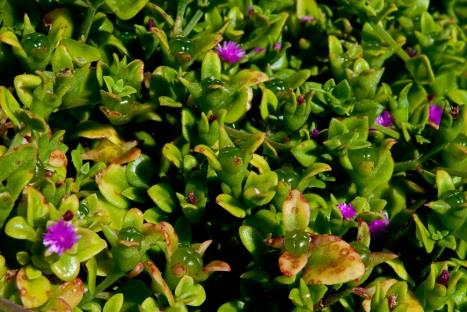
baby sun rose
Aptenia cordifolia
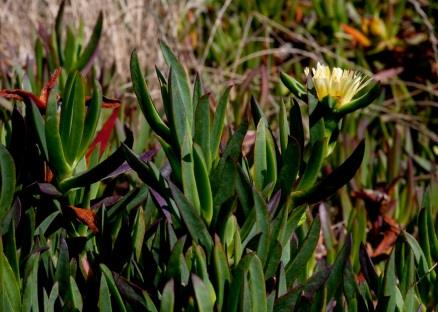
hottentot fig
Carpobrotus edulis
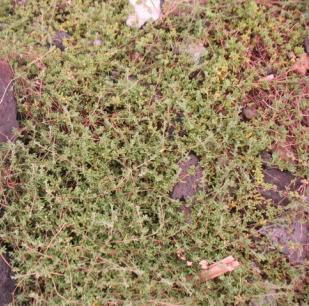
rosea ice plant
Drosanthemum floribundum
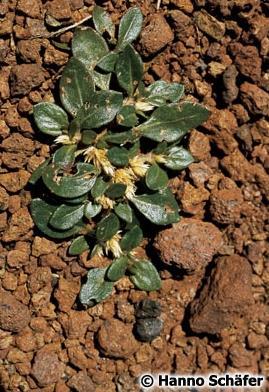
purple joyweed
Alternanthera caracasana