
dusty miller, silver ragwort (Senecio bicolor subsp. cineraria)
dusty miller, silver ragwort
Description
Senecio bicolor subsp. cineraria is a perennial or short-lived subshrub with dense, woolly, silver‑grey leaves that form low mounds and a branching habit. Flower heads are composite and can produce small yellow disk-like inflorescences, but plants are most conspicuous for their felted foliage. The species is broadly associated with Mediterranean climates and ornamental use, where its foliage is valued for contrast in plantings.
Distribution
The catalogue record places Senecio bicolor subsp. cineraria in Continental Portugal, and it is commonly grown in horticulture with occasional escapes from cultivation. Given the lack of detailed observation data, its current extent in the landscape should be considered uncertain and likely concentrated near urban, disturbed or coastal plantings. Monitoring of suspected populations is recommended to clarify its distribution and detect naturalization early.
Management measures
Control should use an integrated approach combining careful hand‑pulling or excavation of whole plants (including roots) before seed set, disposal of plant material to prevent re‑establishment, and follow‑up monitoring to remove regrowth. Restoring competitive native vegetation and minimising soil disturbance reduces re‑invasion risk; cleaning equipment and footwear prevents accidental spread. Chemical control may be considered only as a regulated, professionally supervised option and always in compliance with local rules and environmental protection measures.
Ecological impact
If it escapes cultivation and naturalizes, Senecio bicolor subsp. cineraria can compete with low‑growing native species and alter the composition of disturbed, roadside or coastal plant communities. Its dense silvery foliage may change microhabitat conditions such as light reflectance and litter accumulation, and its floral resources may not substitute effectively for native nectar sources, potentially affecting pollinator networks. The scale of impact in Continental Portugal remains uncertain without systematic surveys, so early detection and rapid response are important.
Related plants
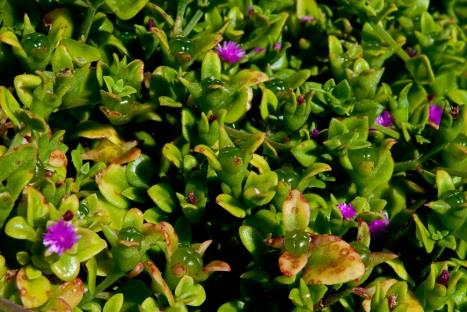
baby sun rose
Aptenia cordifolia
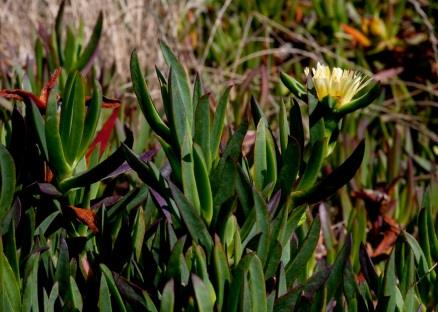
hottentot fig
Carpobrotus edulis
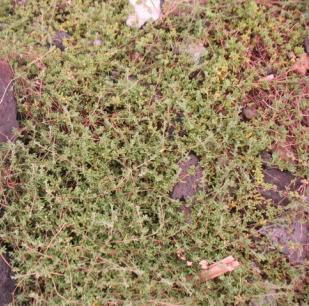
rosea ice plant
Drosanthemum floribundum
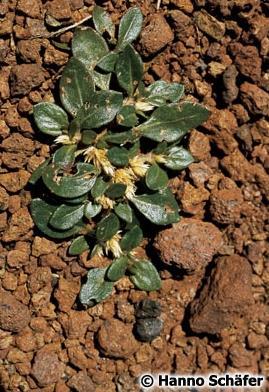
purple joyweed
Alternanthera caracasana