
Salpichroa origanifolia (Salpichroa origanifolia)
Salpichroa origanifolia
Description
Salpichroa origanifolia is a sprawling, semi-woody plant with a vine‑like habit that can form loose mats or climb low vegetation. It has alternate leaves and produces small tubular to bell-shaped flowers followed by fleshy berries, traits typical of the nightshade family. These features make it readily observable in the field when flowering or fruiting and distinguish it from many native herbaceous species.
Distribution
This record refers to occurrences in Continental Portugal, where the species has been noted but appears to have a cautious, possibly scattered presence. Salpichroa origanifolia is broadly native to parts of South America and elsewhere, and in Europe it is known to naturalize in disturbed ground, roadsides and ruderal habitats. Because field records may be incomplete, its true extent in Continental Portugal should be considered provisional and subject to further survey.
Management measures
Management should emphasize early detection, mechanical removal of whole plants including roots where feasible, and careful removal of fruit to prevent seed spread. Follow-up monitoring and re-establishment of competitive native vegetation reduce the chance of re‑colonization; where removal is difficult, cutting and repeated removal of regrowth can reduce populations. Use of herbicide is only advised as a regulated, professionally supervised option and should be combined with containment and disposal measures to avoid further spread.
Ecological impact
Where established, Salpichroa origanifolia can compete with native herbaceous and low-shrub species by forming dense patches that reduce light and space for seedlings. Its fleshy fruits may be dispersed by birds and mammals, facilitating spread into natural and semi-natural habitats and potentially altering local plant community composition. These dynamics can affect succession on disturbed sites and may pose a threat to sensitive native flora if populations expand.
Related plants
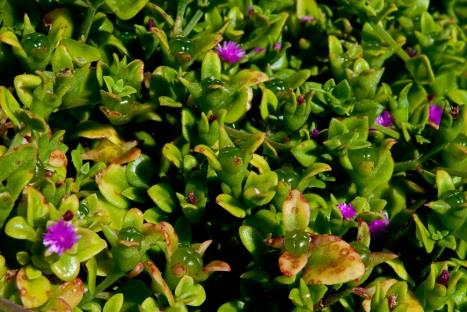
baby sun rose
Aptenia cordifolia
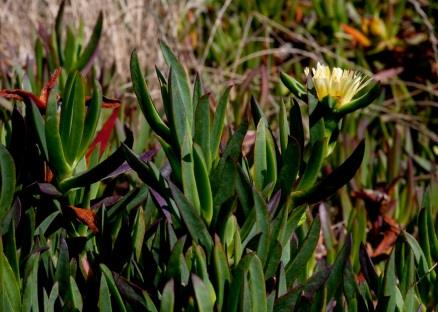
hottentot fig
Carpobrotus edulis
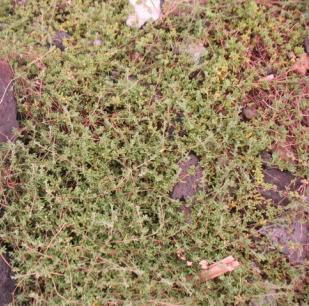
rosea ice plant
Drosanthemum floribundum
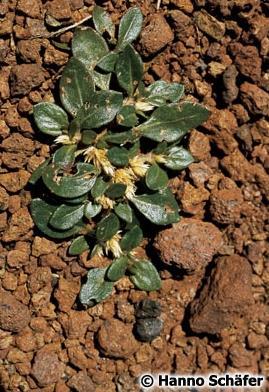
purple joyweed
Alternanthera caracasana