
pokeweed, American pokeweed, pokeberry (Phytolacca americana)
pokeweed, American pokeweed, pokeberry
Description
Phytolacca americana is a herbaceous perennial that may appear shrub-like with erect, often reddish stems, alternate simple leaves and conspicuous elongated clusters of small white-green flowers that develop into glossy dark purple berries. The fruits are fleshy and produce many seeds, and most plant parts are known to be toxic and can stain skin and clothing. These visible features make the species identifiable in the field but can be confused with other berry-producing herbs when not in fruit.
Distribution
Phytolacca americana is native to eastern North America and has become introduced in parts of Europe. There are records indicating its presence in Continental Portugal, but the precise extent, abundance and pattern of occurrence there are uncertain and may be local or scattered. Systematic surveys and recording are recommended to clarify its current distribution before drawing conclusions about its status at large.
Management measures
Management is best based on an integrated approach combining early detection, careful manual or mechanical removal of whole plants including roots, and repeated monitoring to remove resprouts and newly emerged seedlings. All removed material, especially berries and root fragments, should be contained and destroyed or disposed of securely to avoid spreading seeds; do not place infested material in general compost. Chemical control can be considered only as a regulated, professionally supervised option within legal frameworks, and should be used alongside site hygiene and follow-up monitoring.
Ecological impact
Phytolacca americana can form dense stands that compete with native vegetation and change local plant community composition, especially in disturbed or open sites. Its fleshy, bird-dispersed berries promote seed spread and establishment at new locations, creating a persistent seedbank that complicates control. In addition, the species is toxic to humans and some animals, so its presence can pose a risk to livestock, pets and people if not managed appropriately.
Related plants
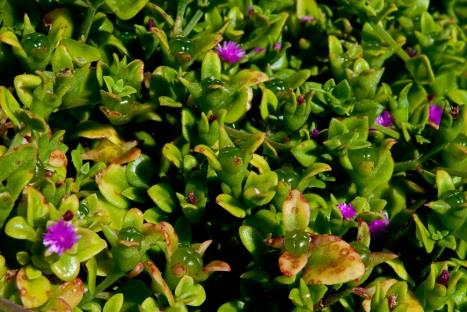
baby sun rose
Aptenia cordifolia
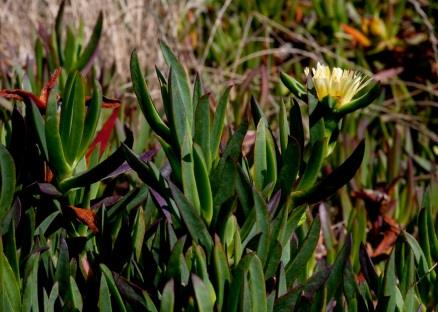
hottentot fig
Carpobrotus edulis
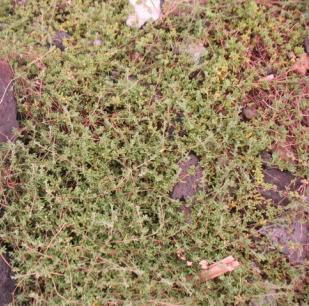
rosea ice plant
Drosanthemum floribundum
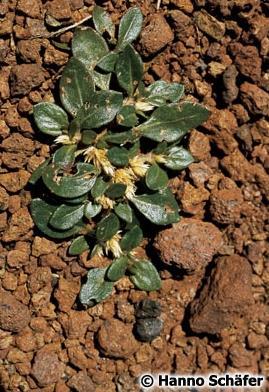
purple joyweed
Alternanthera caracasana