
cato (Opuntia subulata)
cato
Description
Opuntia subulata, commonly called cato, is a succulent shrub-like cactus with jointed stem segments that may be more cylindrical or flattened, bearing conspicuous spines and occasionally fine glochids. It typically produces yellowish flowers and fleshy fruits, and its growth form is variable depending on local conditions. These traits make it easily recognisable in the field even when individual observations are limited.
Distribution
The species is broadly native to South America but has been recorded in parts of continental Portugal, often associated with gardens, roadside verges and dry disturbed slopes; exact records are sparse and the supplied observation was not provided. No specific island occurrences are indicated in the supplied data, so its presence outside the mainland should be considered unconfirmed. Because records are limited, local monitoring is required to establish the true extent of its distribution in Portugal.
Management measures
Management is based on early detection and removal of individual plants and fragments, taking care to collect and properly dispose of detached pads to prevent re-establishment. Mechanical removal combined with follow-up monitoring and restoration with native species is recommended; use of herbicides can be considered only as a regulated, professionally supervised option. Public awareness, restrictions on planting in high‑risk areas and coordinated local action improve long‑term control results.
Ecological impact
If it becomes locally abundant, Opuntia subulata can form dense patches that reduce native plant cover, hinder access for people and livestock and alter habitat structure for native fauna. It may change microhabitats and soil surface conditions, potentially favouring other non-native species and complicating restoration efforts. Potential hybridisation with related cacti could further complicate management and genetic integrity of local populations.
Related plants
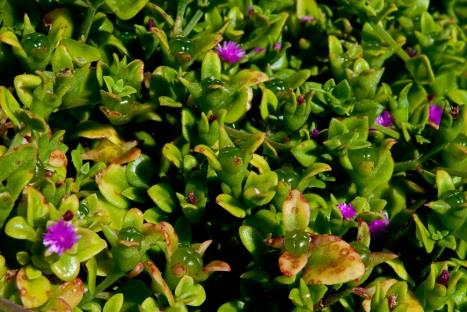
baby sun rose
Aptenia cordifolia
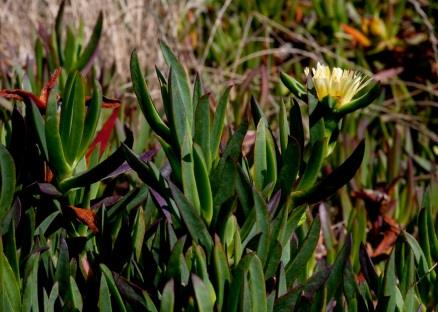
hottentot fig
Carpobrotus edulis
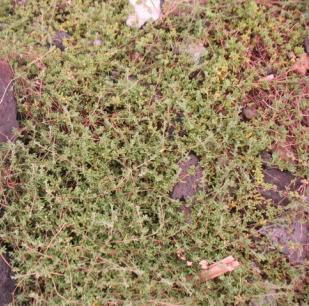
rosea ice plant
Drosanthemum floribundum
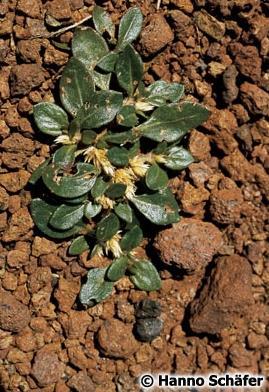
purple joyweed
Alternanthera caracasana