
parrotfeather, Brazilian watermilfoil (Myriophyllum aquaticum)
parrotfeather, Brazilian watermilfoil
Description
Myriophyllum aquaticum is a perennial aquatic plant with distinctive feather-like, finely divided leaves arranged in whorls on emergent stems, giving a characteristic 'parrot‑feather' appearance. It is native to South America and is commonly associated with ornamental ponds and aquaria. The species forms dense mats and spreads primarily by vegetative fragments and rooting along stems.
Distribution
In Continental Portugal Myriophyllum aquaticum has been reported from ornamental water bodies and slow-moving freshwater habitats, but specific local records should be confirmed because the original observation is not supplied. Elsewhere it is widely introduced in temperate regions as an aquarium or pond escapee. Its distribution in the region is often patchy and closely linked to human-mediated introductions and habitat suitability.
Management measures
Management emphasizes early detection, rapid removal of floating fragments and containment to reduce spread, combined with regular monitoring and public outreach to prevent new introductions. Mechanical removal and careful disposal of plant material are primary measures; the use of herbicide is only a regulated, professionally supervised option and must follow legal and environmental guidance. Restoring flow conditions and promoting native aquatic vegetation can help reduce the likelihood of recolonization.
Ecological impact
When abundant, Myriophyllum aquaticum can form dense surface mats that reduce light penetration, alter oxygen regimes and displace native submerged and emergent plants. Dense growth can impede water flow, interfere with recreation and change habitat structure for invertebrates and fish. Its capacity to reproduce from fragments increases the risk of rapid local spread after disturbance.
Related plants
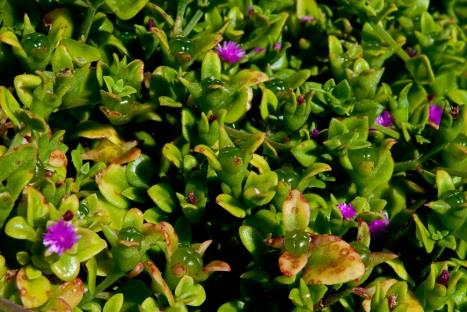
baby sun rose
Aptenia cordifolia
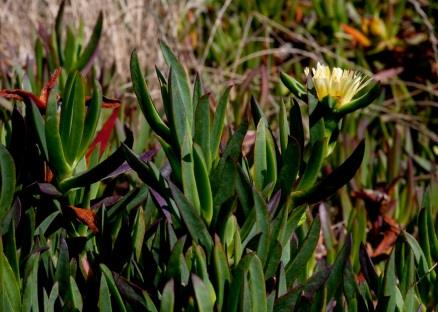
hottentot fig
Carpobrotus edulis
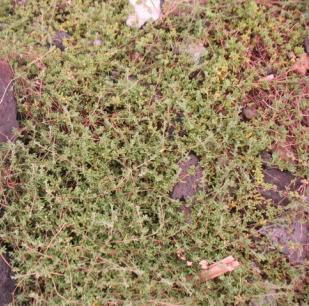
rosea ice plant
Drosanthemum floribundum
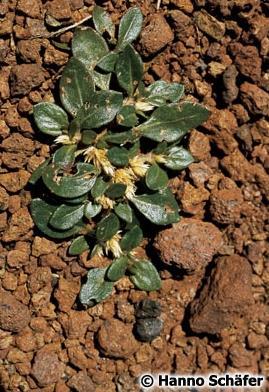
purple joyweed
Alternanthera caracasana