
African elodea (Lagarosiphon major)
African elodea
Description
Lagarosiphon major is a submerged aquatic plant with long, branching stems and crowded, narrow leaves often arranged in dense spirals or whorls. The species forms visually distinctive, often tangled mats of vegetation in still or slow-moving water and can reproduce by fragmentation as well as by seed, with small inconspicuous flowers. In Continental Portugal it should be recognised by its translucent, flexible stems and the dense underwater growth habit that can dominate shallow habitats.
Distribution
Lagarosiphon major is native to southern Africa but has been introduced to freshwater systems in other regions. Records indicate its presence in Continental Portugal, although specific localities and observation details were not supplied for this catalogue entry. Given its known ecology elsewhere, it can establish in lakes, canals and slow-flowing rivers where conditions allow dense submerged growth.
Management measures
Management is best approached as an integrated programme combining early detection, repeated monitoring and physical control such as careful hand-pulling or mechanical removal where feasible. Preventing spread by cleaning boats and equipment, disposing of removed material responsibly and restoring native vegetation are important complementary measures; herbicide use should be considered only as a regulated, professionally supervised option. Long-term control typically requires sustained effort and site-specific planning to avoid repeated re-infestation from fragments or contaminated equipment.
Ecological impact
Where Lagarosiphon major becomes dense it can outcompete native submerged plants, reduce light penetration and alter the structure of aquatic plant communities. Dense stands may change oxygen dynamics and habitat quality for fish and invertebrates, while also impeding water flow, recreation and water-management infrastructure. These impacts can lead to reduced native biodiversity and altered sediment and nutrient processes in affected water bodies.
Related plants
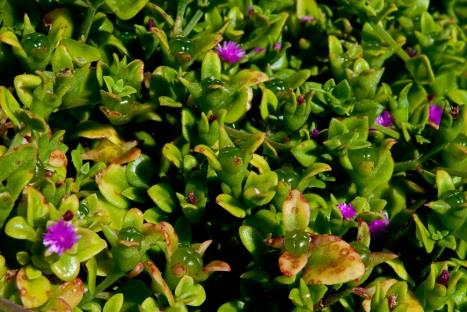
baby sun rose
Aptenia cordifolia
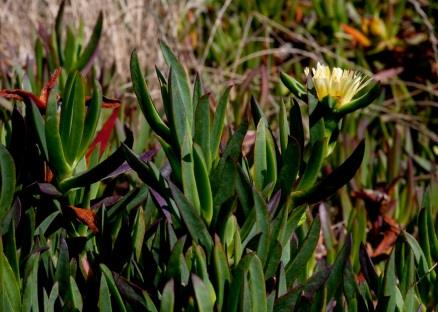
hottentot fig
Carpobrotus edulis
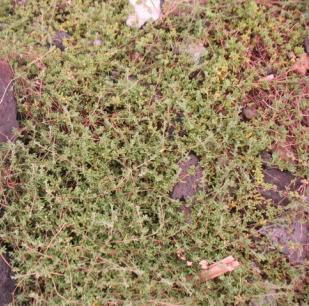
rosea ice plant
Drosanthemum floribundum
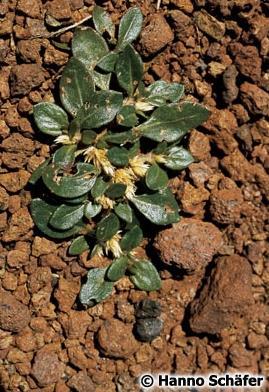
purple joyweed
Alternanthera caracasana