
sanguinária do Japão (Fallopia japonica)
sanguinária do Japão
Description
Fallopia japonica is a vigorous perennial with a conspicuous rhizome system and above-ground stems that are often bamboo-like in appearance. Leaves are broadly ovate and the plant produces clusters of small, creamy-white flowers; it regenerates readily from root fragments. The species is native to East Asia but is widely known as an introduced, rhizomatous weed in many temperate regions.
Distribution
This record is catalogued for Continental Portugal, but no specific observation details are supplied, so local distribution within the continent should be regarded as uncertain without targeted surveys. In general, Fallopia japonica establishes in disturbed habitats such as riverbanks, roadsides and urban margins, and it is often reported from such settings in temperate regions. Observers are advised to report confirmed occurrences to local surveillance programmes to improve distribution knowledge.
Management measures
Management requires an integrated approach combining repeated mechanical control, removal or excavation of rhizomes where practicable, containment and long-term monitoring to detect regrowth. Careful disposal of cleared material and restoration with competitive native vegetation can help reduce reinvasion; physical control often needs to be repeated over multiple seasons. Chemical control with herbicide may be considered but only as a regulated, professionally supervised option within an integrated management plan.
Ecological impact
Fallopia japonica can form dense, monospecific stands that outcompete native plants and reduce local biodiversity in invaded areas. Its extensive rhizome network can alter soil structure and local hydrology, potentially contributing to bank instability along waterways and interfering with infrastructure. Even where present in small patches, it can rapidly expand and change community composition if not managed.
Related plants
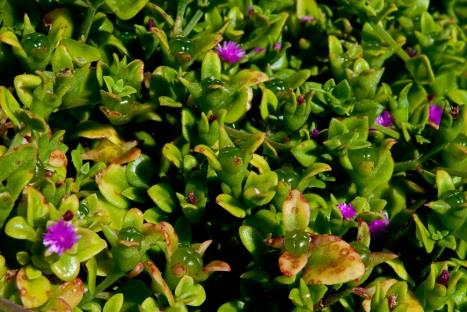
baby sun rose
Aptenia cordifolia
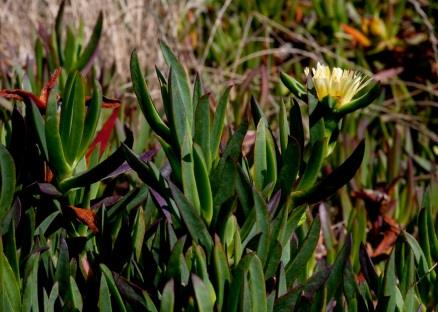
hottentot fig
Carpobrotus edulis
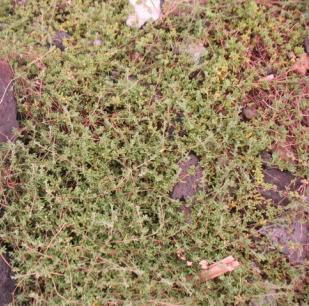
rosea ice plant
Drosanthemum floribundum
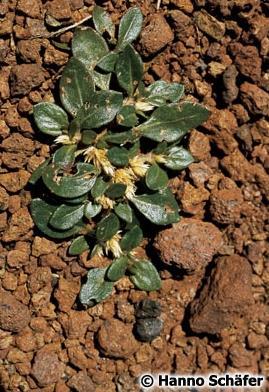
purple joyweed
Alternanthera caracasana