
blue gum, Tasmanian blue gum, common eucalyptus (Eucalyptus globulus)
blue gum, Tasmanian blue gum, common eucalyptus
Description
Eucalyptus globulus is a tall evergreen tree with smooth bark that peels in strips, lance-shaped adult leaves, conspicuous clusters of white to cream flowers and persistent woody capsules known as gumnuts. Young plants often show different, glossier juvenile leaves while mature stems bear the typical aromatic, oil-rich foliage. Its strong smell, rapid growth habit and ability to resprout from lignotubers or coppice shoots are readily observable in the field.
Distribution
Native to south-eastern Australia and Tasmania, Eucalyptus globulus has been widely planted outside its native range and is present in Continental Portugal where it occurs in plantations, shelterbelts and some naturalized stands. Records indicate it can establish from seed in disturbed soils and along transport corridors, but distribution can be patchy and often linked to historical planting. Local monitoring is advisable because planted trees may act as seed sources for nearby habitats.
Management measures
Management relies on integrated approaches: preventing new seedling establishment, removing young trees by pulling or cutting before they set seed, and restoring cleared sites with native vegetation to reduce re-invasion. Mechanical control is common and herbicide use is a legally regulated option that should be applied only by trained professionals under local regulations; follow-up monitoring is essential to detect resprouts. Where large stands exist, coordinated landscape-level planning and public awareness reduce unintended spread and help prioritise control actions.
Ecological impact
Eucalyptus globulus can alter ecosystem processes by producing a thick, slow-decomposing litter layer and by increasing local flammability, which may change fire regimes and affect fire-sensitive native species. Its high water use and dense canopy can reduce understorey diversity and compete with native trees and shrubs, potentially lowering habitat quality for some fauna. In plantation or naturalised settings it may form monocultures or sparse native regeneration, so impacts on biodiversity and hydrology should be considered when planning land use.
Related plants
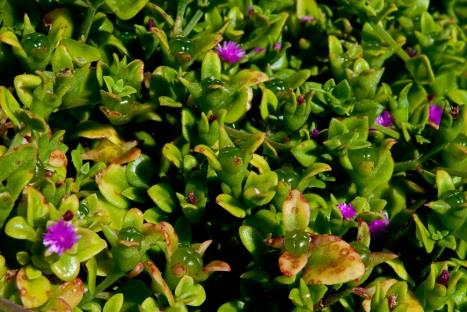
baby sun rose
Aptenia cordifolia
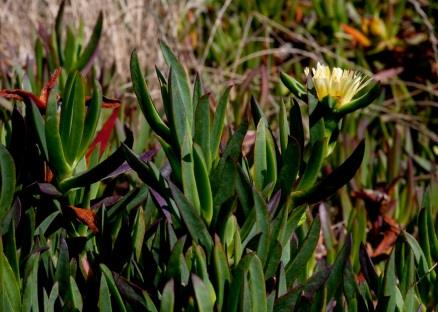
hottentot fig
Carpobrotus edulis
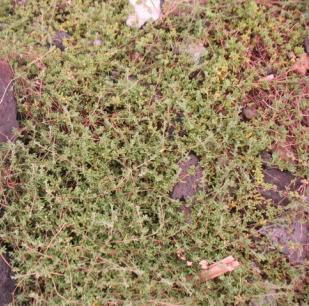
rosea ice plant
Drosanthemum floribundum
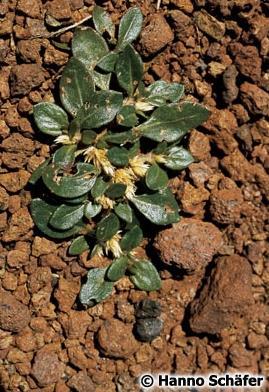
purple joyweed
Alternanthera caracasana