
giant sea holly (Eryngium pandanifolium)
giant sea holly
Description
Eryngium pandanifolium is a robust, perennial umbellifer with long, rigid, often spiny leaves and tall branched flowering stems bearing thistle-like, blue to bluish-white inflorescences. It has a striking architectural habit that is readily noticed in cultivation and in escapes from gardens, and the scientific name Eryngium pandanifolium is used for clear identification. The species is broadly native to parts of South America and shows traits that allow persistence in moist or disturbed soils.
Distribution
Catalogue records place this species in Continental Portugal, but no observation details were supplied for this record, so its distribution in Portugal should be regarded as uncertain and likely limited to isolated cultivated plants or escapes. Outside the catalogue entry, Eryngium pandanifolium is known from its native range in South America and from ornamental plantings elsewhere, with occasional naturalizing reports in suitable wet or riparian habitats. Continued monitoring and verification of local records are needed to confirm whether self-sustaining populations exist on the Portuguese mainland.
Management measures
Management of Eryngium pandanifolium should follow integrated approaches that prioritise early detection, regular monitoring and physical removal of entire plants including root material to reduce re-sprouting. Care should be taken to remove flowering heads before seed set, to bag and dispose of material securely and to restore cleared sites with native species to reduce re-invasion; soil disturbance should be minimised to avoid creating establishment opportunities. Herbicide use should be considered only as a regulated, professionally supervised option and combined with follow-up monitoring and site restoration.
Ecological impact
Where it establishes, Eryngium pandanifolium can form dense clumps that shade and outcompete smaller native wetland or riparian plants, potentially reducing local plant diversity and altering habitat structure. Such changes may affect associated invertebrate and bird communities by modifying available resources and nesting cover. Although it can provide nectar to pollinators, its overall ecological effect is uncertain in Portugal and merits precautionary control where it shows signs of spreading.
Related plants
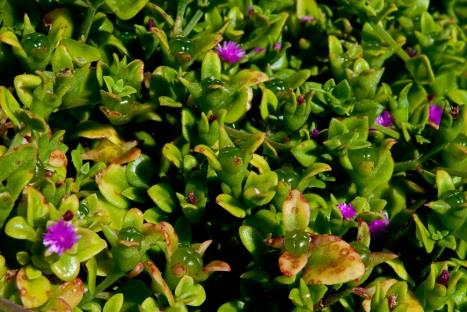
baby sun rose
Aptenia cordifolia
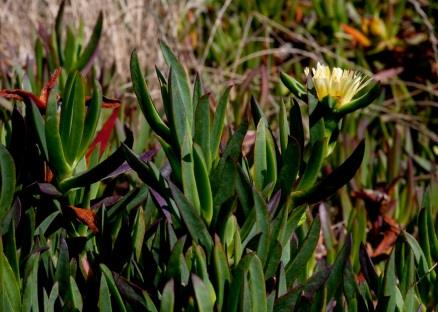
hottentot fig
Carpobrotus edulis
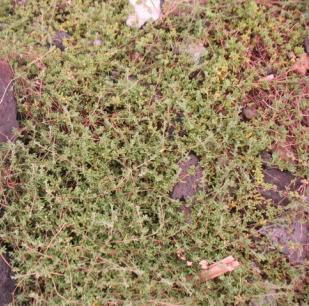
rosea ice plant
Drosanthemum floribundum
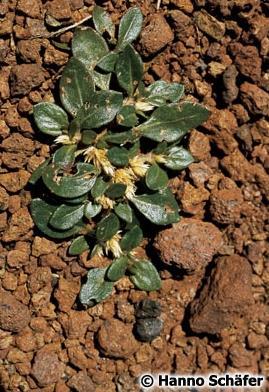
purple joyweed
Alternanthera caracasana