
Canadian pondweed, common elodea, Canadian waterweed, American elodea, broad waterweed (Elodea canadensis)
Canadian pondweed, common elodea, Canadian waterweed, American elodea, broad waterweed
Description
Elodea canadensis is a submerged perennial aquatic macrophyte with long, branching stems bearing leaves in dense whorls that are typically lanceolate to linear. It produces small, inconspicuous flowers and commonly spreads vegetatively by fragments and lateral shoots rather than by seed. The species is native to North America and has become widely introduced in temperate freshwater systems elsewhere.
Distribution
Elodea canadensis occurs in many temperate regions and is typically found in ponds, lakes, slow-flowing rivers and canals where water movement is low. For this catalogue it is reported from Continental Portugal, but no specific observation details are supplied, so local occurrence and extent should be verified by targeted surveys. The species often spreads regionally via equipment, boats and the aquarium/horticultural trade, so human-mediated dispersal is an important pathway.
Management measures
Management should follow an integrated approach combining prevention, surveillance and early intervention; regular monitoring and rapid removal of new stands reduce establishment risk. Physical control such as careful hand-pulling, raking or mechanical harvesting can be effective for localized infestations, always ensuring removed plant material is contained and disposed of to prevent fragment spread. Chemical control (herbicide) is a regulated option and should be used only under professional supervision, and efforts to restore native aquatic vegetation and limit re-introduction are recommended after removal.
Ecological impact
Where abundant, Elodea canadensis can form dense submerged mats that shade and outcompete native macrophytes, altering plant community composition and reducing biodiversity. Dense growth can change oxygen dynamics, nutrient cycling and sedimentation, with potential negative effects on invertebrates, fish and water quality as well as on navigation and recreational use. The magnitude of impacts depends on local conditions; small or isolated occurrences may be of limited consequence while extensive stands can substantially modify freshwater ecosystem functioning.
Related plants
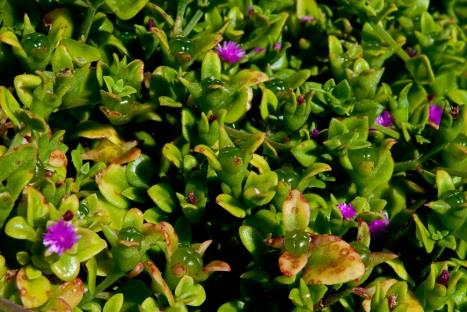
baby sun rose
Aptenia cordifolia
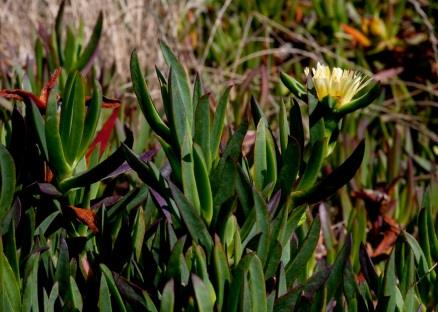
hottentot fig
Carpobrotus edulis
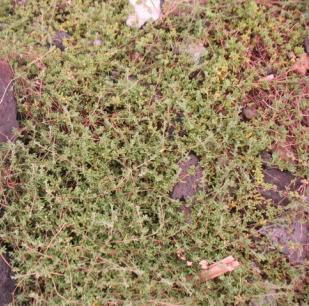
rosea ice plant
Drosanthemum floribundum
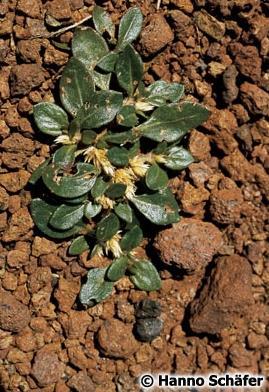
purple joyweed
Alternanthera caracasana