
leafy elodea, Brazilian elodea, Brazilian waterweed, common waterweed, dense waterweed, egeria (Egeria densa)
leafy elodea, Brazilian elodea, Brazilian waterweed, common waterweed, dense waterweed, egeria
Description
Egeria densa is a submerged perennial aquatic plant with long, branching, translucent green stems and leaves often arranged in dense whorls. It produces small, pale flowers above the water in some conditions and spreads readily by fragmentation and vegetative growth from stem tips and nodes. The species is native to parts of South America and is commonly introduced elsewhere through the aquarium trade.
Distribution
This catalogue record refers to Continental Portugal; no precise observation details were supplied with the source. Egeria densa is known globally as an introduced freshwater species and may be present in ponds, canals and slow-moving rivers in Continental Portugal where escapes from cultivation or aquaria have occurred elsewhere. Because no specific locality or voucher was provided, presence in particular waterbodies should be verified by targeted surveys.
Management measures
Management should rely on integrated measures including prevention, early detection, and repeated physical removal of mats and fragments, combined with careful disposal to avoid further spread. Local containment, public awareness (especially of aquarium disposal), and long-term monitoring are important, and chemical control should be considered only as a regulated, professionally supervised option within a broader management plan. Because Egeria densa regenerates easily from fragments, follow-up checks after any intervention are essential.
Ecological impact
Egeria densa can form dense underwater stands that shade out native aquatic macrophytes, alter oxygen regimes and change habitat structure for invertebrates and fish. Large infestations may impede water flow, foul infrastructure and increase sedimentation or promote algal blooms by modifying nutrient dynamics. These changes can reduce biodiversity and affect recreational and water-use values of infested waterbodies.
Related plants
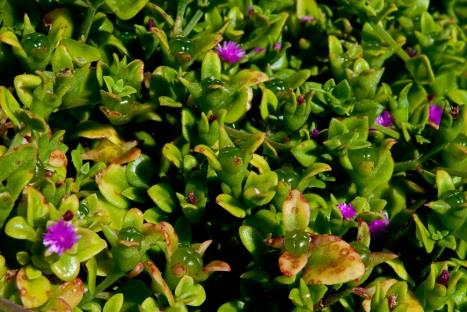
baby sun rose
Aptenia cordifolia
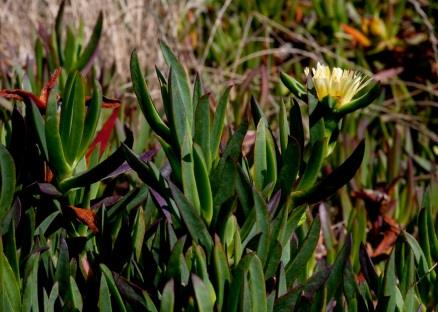
hottentot fig
Carpobrotus edulis
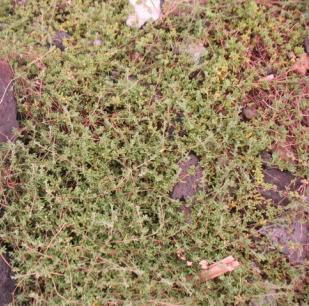
rosea ice plant
Drosanthemum floribundum
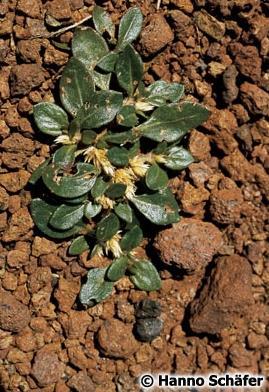
purple joyweed
Alternanthera caracasana