
feto-arbóreo-da-Tâsmania (Dicksonia antarctica)
feto-arbóreo-da-Tâsmania
Description
Dicksonia antarctica is a tree fern with a stout, fibrous trunk bearing a crown of large, arching pinnate fronds; new growth appears as coiled fiddleheads and reproduction is by wind‑dispersed spores. It is native to Tasmania and parts of southeastern Australia and is widely planted as an ornamental in temperate gardens. In continental Portugal it is primarily known from cultivation and planted specimens rather than from widespread wild populations.
Distribution
The catalogue location indicates Continental Portugal, but no specific wild observations are supplied for this record. Where present in the region, Dicksonia antarctica is most often encountered in horticultural contexts, botanical collections or sheltered gardens, and evidence for sizeable naturalised populations on the mainland is limited or lacking. Any reports of escapes should be corroborated by field verification and local monitoring before concluding that the species is established in the wild.
Management measures
Prevention and early detection are the most effective measures: avoid planting Dicksonia antarctica near natural or semi‑natural habitats and inspect garden escapees regularly for volunteer juveniles. Mechanical removal of saplings and careful excavation of trunk and root material, followed by secure disposal, reduces the chance of re‑establishment; any work should include follow‑up monitoring to detect resprouting from persistent tissues. The use of herbicides may be considered only as a regulated, professionally supervised option within an integrated management plan and in accordance with local regulations.
Ecological impact
If allowed to naturalise, Dicksonia antarctica can form dense stands or isolated canopy patches that shade the understory and alter microclimates, potentially suppressing low-growing native plants. Its fibrous trunks and persistent frond litter may modify litter accumulation and local moisture regimes, which could influence seedling recruitment of native species and local invertebrate communities. However, the magnitude of these impacts in continental Portugal remains uncertain given the current limited evidence of wild establishment.
Related plants
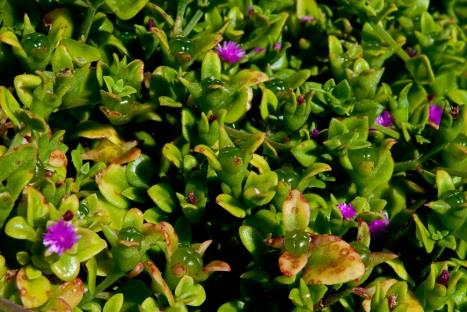
baby sun rose
Aptenia cordifolia
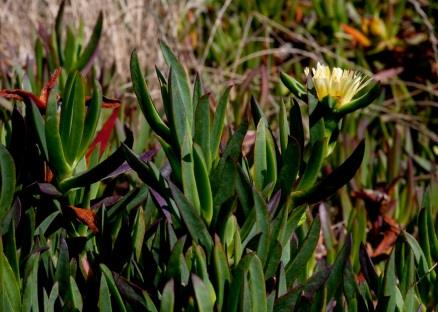
hottentot fig
Carpobrotus edulis
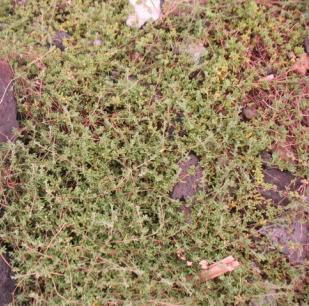
rosea ice plant
Drosanthemum floribundum
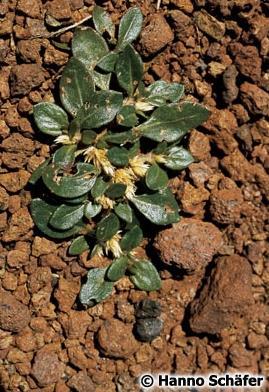
purple joyweed
Alternanthera caracasana