
Cape ivy, German ivy (Delairea odorata=Senecio mikanio...)
Cape ivy, German ivy
Description
Delairea odorata=Senecio mikanio... is a vigorous, evergreen climbing and trailing vine with fleshy, lobed leaves and long, creeping stems that readily root at the nodes. It produces small, clustered, daisy‑like flower heads and can form dense mats over the ground or climb into shrubs and trees. These visible growth habits make it conspicuous in gardens, hedgerows and disturbed sites where it escapes cultivation.
Distribution
The species is native to southern Africa but has become widely introduced elsewhere; in this catalogue it is noted from Continental Portugal. Exact local occurrences and abundance within the mainland are uncertain without targeted surveys, so the present distribution should be considered provisional and likely restricted to disturbed urban, peri‑urban and roadside habitats. Continued monitoring and reporting of sightings will help clarify its current extent in Portugal.
Management measures
Management relies on an integrated approach of prevention, early detection, regular monitoring and physical control such as hand pulling, cutting and removal of rooted runners with follow‑up to exhaust remaining reserves. Removed material should be contained and disposed of safely (not composted) and affected sites restored with native species to reduce reinvasion; public awareness and rapid reporting are important to limit spread. Chemical control may be used only as a regulated, professionally supervised option and should be part of a documented management plan carried out by trained personnel.
Ecological impact
Where it becomes abundant, Delairea odorata=Senecio mikanio... can form dense ground mats and heavy vines that smother native herbs and seedlings and overtop shrubs and young trees, reducing light availability and hindering natural regeneration. This competitive habit can simplify plant communities, lower native biodiversity and alter habitat structure for invertebrates and birds. In riparian and shaded coastal areas its growth may change microhabitats and complicate restoration efforts if left unmanaged.
Related plants
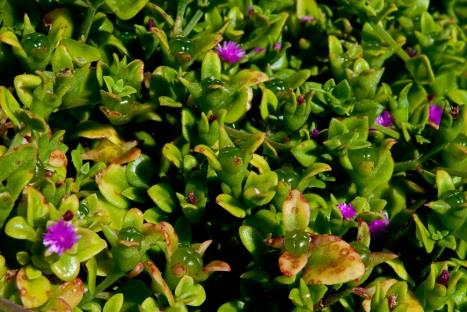
baby sun rose
Aptenia cordifolia
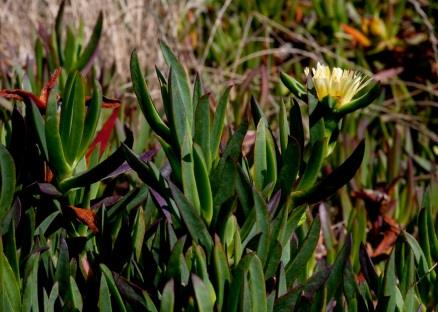
hottentot fig
Carpobrotus edulis
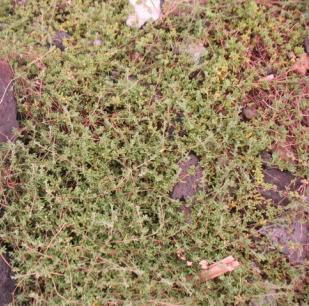
rosea ice plant
Drosanthemum floribundum
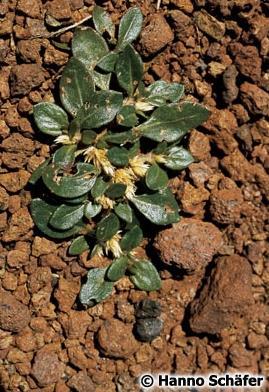
purple joyweed
Alternanthera caracasana