
Japanese holly fern; Asian net-veined holly fern; house holly fern; Japanese netvein holly fern (Cyrtomium falcatum)
Japanese holly fern; Asian net-veined holly fern; house holly fern; Japanese netvein holly fern
Description
Cyrtomium falcatum is an evergreen fern forming neat basal clumps of arching, leathery fronds with pinnate pinnae that are often rounded to slightly toothed. The fronds have a glossy, holly‑like appearance which gives rise to common names such as Japanese holly fern or net‑veined holly fern. The species is native to East Asia and is widely used in horticulture as an ornamental and house plant.
Distribution
In Continental Portugal Cyrtomium falcatum is mainly known from cultivation in gardens, parks and as an indoor plant, with occasional escapes reported elsewhere in Europe. Formal records of established wild populations in mainland Portugal are limited or sparse, so its distribution in natural habitats should be treated as cautious and needing verification. Because no specific observation is supplied for this catalogue record, local surveys are recommended to confirm any wild occurrences.
Management measures
Management should prioritise prevention, early detection and physical removal of escaped plants, including careful excavation of rhizomes and secure disposal of plant material to prevent re‑establishment. Maintain and restore native groundcover and avoid planting near vulnerable natural woodlands or riparian sites, and record occurrences to allow timely follow‑up. Chemical control is only appropriate as a regulated, professionally supervised option and must comply with local legislation and best practice.
Ecological impact
Where it escapes cultivation, Cyrtomium falcatum can form persistent clumps that compete with native understory species and alter local groundcover composition in shaded, moist sites. Such stand formation can reduce space available for native ferns and herbaceous plants and modify microhabitats used by invertebrates. The overall ecological impact in Continental Portugal is likely limited where populations are small, but monitoring is advisable to detect any expansion into natural areas.
Related plants
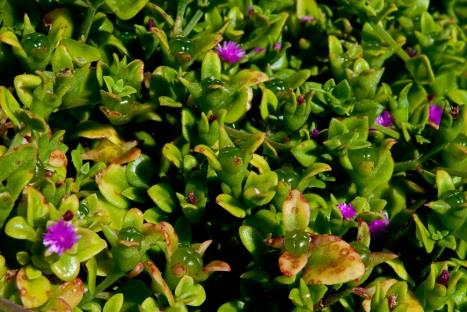
baby sun rose
Aptenia cordifolia
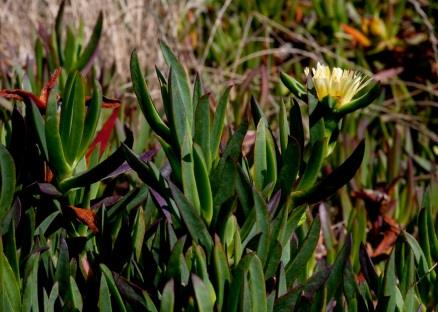
hottentot fig
Carpobrotus edulis
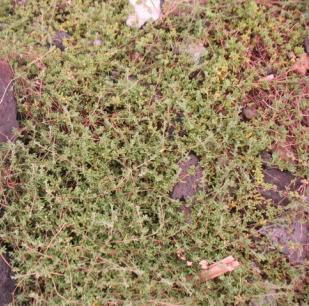
rosea ice plant
Drosanthemum floribundum
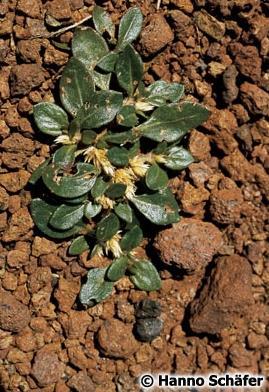
purple joyweed
Alternanthera caracasana