
Canadian fleabane, Canadian horseweed (Conyza canadensis)
Canadian fleabane, Canadian horseweed
Description
Conyza canadensis is a fine‑haired, erect annual or short‑lived perennial herb with narrow, often hairy leaves and many-branched stems that carry numerous small composite flower heads producing fine, wind‑dispersed pappus seeds. Plants characteristically form tall, slender inflorescences of small daisy‑like heads late in the season, with inconspicuous florets and abundant fluffy seeds. These visible traits — branched stems, narrow leaves and feathery seed heads — make the species recognizable in ruderal and open habitats.
Distribution
In Continental Portugal Conyza canadensis is associated with disturbed sites such as roadsides, field margins, waste ground and urban vacant lots, but no specific observation is supplied for this catalogue record. The species is native to North America and has been widely introduced to other continents; in Portugal it typically occurs where soil disturbance, cultivation or transport corridors facilitate colonization. Its distribution can be patchy and concentrated in human‑altered landscapes rather than intact natural habitats.
Management measures
Management emphasises prevention of seed set and reduction of the seed bank through integrated measures: sanitation of equipment, prompt removal of young plants, and restoration of competitive vegetation cover. Mechanical control (mowing or pulling) before flowering and repeated monitoring are important to prevent recolonisation, and habitat management to reduce disturbance helps long‑term control. Chemical control may be considered only as a regulated, professionally supervised option and should be used alongside non‑chemical measures and follow‑up monitoring.
Ecological impact
Conyza canadensis can form dense stands in disturbed areas and compete with crops, horticultural plants and native pioneer species, potentially reducing local plant diversity in frequently disturbed sites. Its abundant wind‑dispersed seeds create a persistent source for recolonisation and can facilitate spread along roads and transport corridors. Although it can provide some nectar to insects, its primary ecological effect is as a disturbance‑adapted coloniser that alters vegetation composition and increases management needs.
Related plants
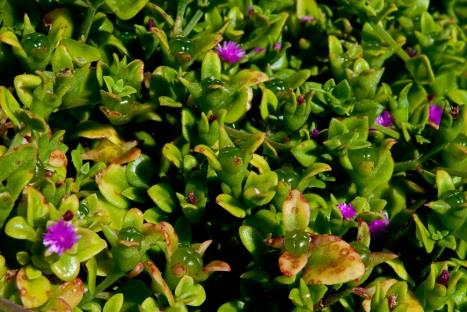
baby sun rose
Aptenia cordifolia
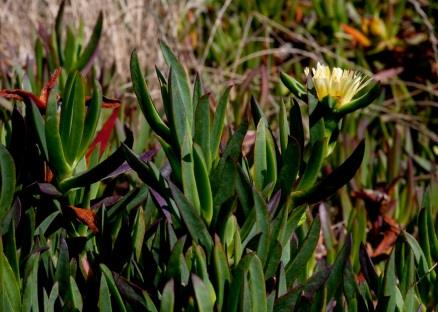
hottentot fig
Carpobrotus edulis
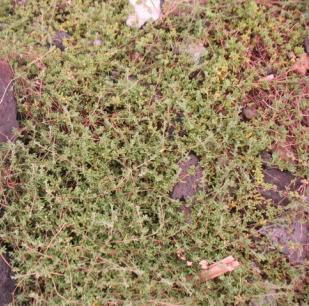
rosea ice plant
Drosanthemum floribundum
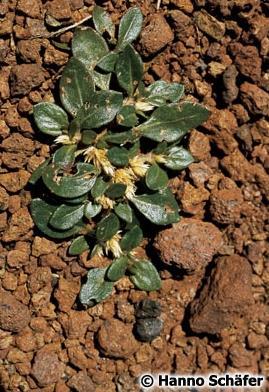
purple joyweed
Alternanthera caracasana