
annual saltmarsh aster (Aster squamatus)
annual saltmarsh aster
Description
Aster squamatus is an annual, salt‑marsh associated composite with erect to sprawling stems, narrow alternate leaves and small daisy‑like flower heads with pale ray florets surrounding a central disc. It is typically found on saline or brackish substrates and is noticeable for its annual lifecycle and clustered flowering during the growing season. These traits make it adapted to disturbed coastal wetland margins and ephemeral open ground.
Distribution
The catalogue location given is Continental Portugal but no specific observation details were supplied, so occurrence in this dataset should be treated as reported but not independently verified. Broadly, Aster squamatus is known from coastal saltmarsh habitats outside Europe and has a probable origin in the Americas, with introduced occurrences elsewhere. Confirmation of its distribution in Continental Portugal requires targeted field surveys and reporting to local botanical records.
Management measures
Management should prioritize early detection, routine monitoring of saltmarsh edges and prompt removal of isolated plants by hand‑pulling or cutting before seed set to reduce spread. For larger or persistent infestations use an integrated approach combining mechanical control, restoration of native halophytes and strict biosecurity to limit seed dispersal; herbicide may be considered only as a regulated, professionally supervised option when other measures are insufficient. Long‑term management also benefits from restoring natural sediment dynamics and native plant communities to reduce recolonization.
Ecological impact
Where established, Aster squamatus can compete with indigenous saltmarsh species for space and resources, potentially altering community composition in disturbed or edge habitats. Its presence may change food and shelter availability for invertebrates and shorebirds and could locally affect sediment trapping or hydrology if it forms dense patches. The magnitude of impacts in Continental Portugal remains uncertain without verified records and systematic monitoring.
Related plants
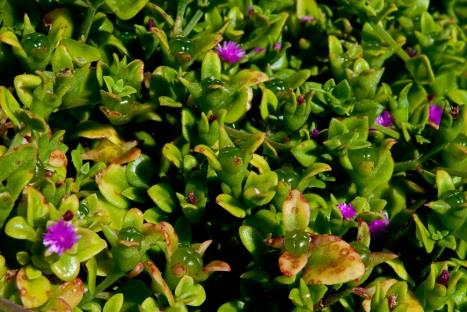
baby sun rose
Aptenia cordifolia
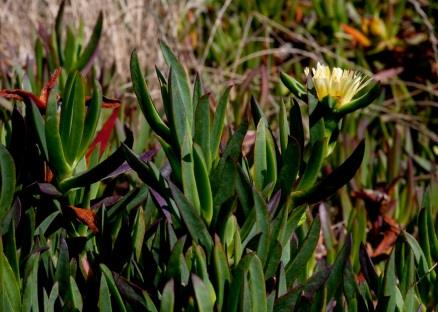
hottentot fig
Carpobrotus edulis
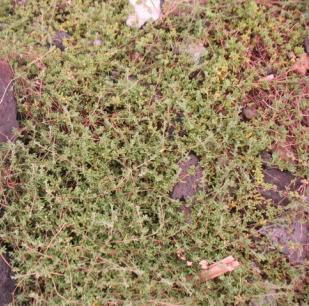
rosea ice plant
Drosanthemum floribundum
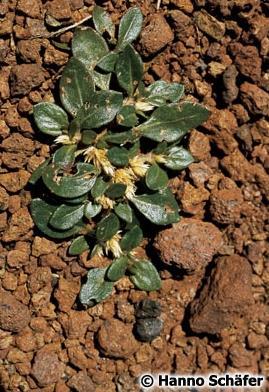
purple joyweed
Alternanthera caracasana