
giant reed, giant cane (Arundo donax)
giant reed, giant cane
Description
Arundo donax is a tall, perennial reed-like grass with robust, often hollow canes, long lanceolate leaves and large feathery inflorescences. It spreads mainly by an extensive rhizome network and by fragments of stems and roots, which makes eradication difficult. Its broad native range includes the Mediterranean region and parts of western and southern Asia.
Distribution
In this catalogue the species is recorded for Continental Portugal; no island records or specific observation details were supplied. Within Portugal it is most commonly associated with riparian corridors, drainage channels and other disturbed moist sites, and it has often been planted historically for erosion control or biomass. Its occurrence can be patchy but persistent where established, and localized populations can expand along waterways.
Management measures
Effective control requires an integrated approach combining repeated cutting or removal, excavation or thorough removal of rhizomes, containment of plant fragments during work and long-term monitoring to prevent regrowth. Restoring native vegetation after removal helps stabilise banks and reduce the likelihood of reinvasion; burning is generally discouraged. Chemical control may be considered only as a regulated, professionally supervised option and should follow local legal requirements and best-practice guidance.
Ecological impact
Arundo donax readily forms dense monospecific stands that displace native vegetation and reduce habitat heterogeneity along watercourses. It can alter hydrology and sediment dynamics, increase fire risk in drier periods and impede access for management and recreation. Although its rhizome system can stabilise some banks, stands often lead to homogenised habitats with reduced biodiversity and altered ecosystem function.
Related plants
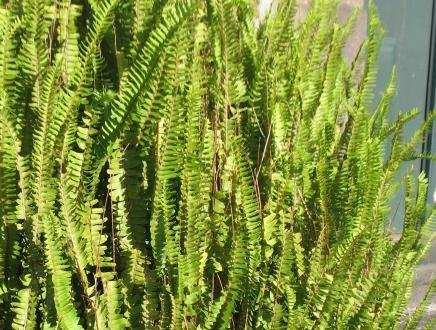
sword fern
Nephrolepis cordifolia
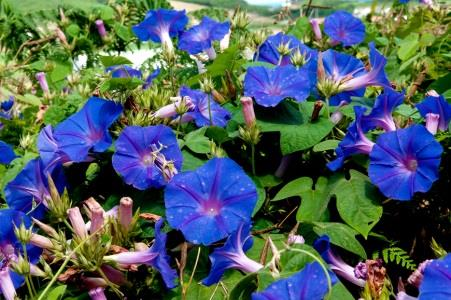
blue morning glory
Ipomoea indica
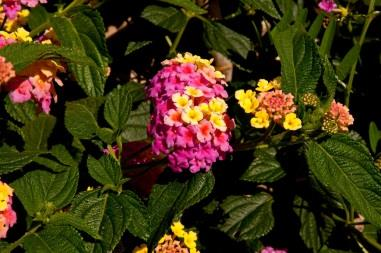
lantana
Lantana camara
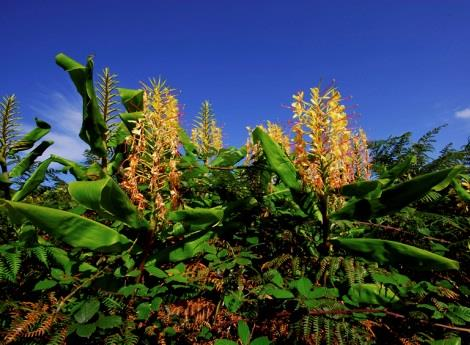
kahili ginger
Hedychium gardnerianum