
capeweed, South African capeweed (Arctotheca calendula)
capeweed, South African capeweed
Description
Arctotheca calendula is a prostrate, often stoloniferous plant forming a basal rosette of hairy, lobed leaves and producing conspicuous yellow, daisy-like flower heads frequently with a darker central zone. It reproduces by many small achenes and can behave as an annual or short‑lived perennial depending on conditions. These visible traits make it relatively easy to spot in open, disturbed sites where it forms low mats.
Distribution
Arctotheca calendula is native to southern Africa but has been reported outside its native range in many temperate regions. In Continental Portugal the species has been recorded and may occur locally in disturbed ground, roadsides, pastures and coastal margins, though its exact spread and abundance are uncertain. Observations are often patchy, so distribution should be treated as potentially sporadic and subject to change with land use and climate.
Management measures
Management relies on an integrated approach combining prevention, early detection and removal before seed set, and restoration of competitive vegetation to reduce reinvasion. Mechanical measures such as hand‑pulling, repeated mowing or targeted removal of flowering heads can be effective for small infestations; proper disposal of removed material and monitoring for seedlings are important because of the persistent seed bank. Herbicide use can be considered only as a regulated, professionally supervised option within an integrated plan and following local guidance.
Ecological impact
Where it becomes abundant, Arctotheca calendula can form dense mats that reduce native plant diversity and alter the composition of grasslands and disturbed coastal vegetation. It can compete with pasture species and young crops, potentially reducing forage quality and altering management needs. Seed bank persistence and the ability to establish in open sites mean impacts can be long‑lasting without sustained management.
Related plants
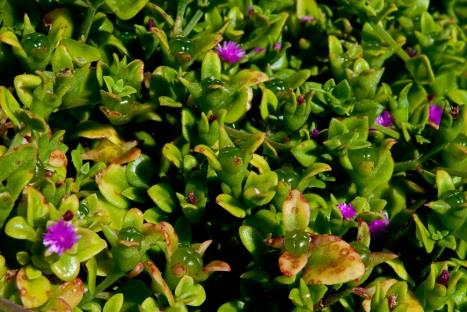
baby sun rose
Aptenia cordifolia
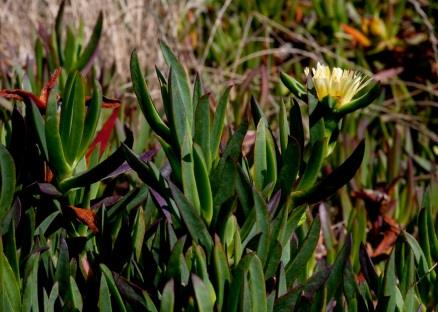
hottentot fig
Carpobrotus edulis
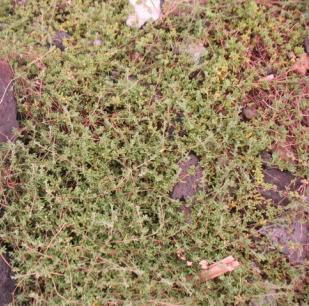
rosea ice plant
Drosanthemum floribundum
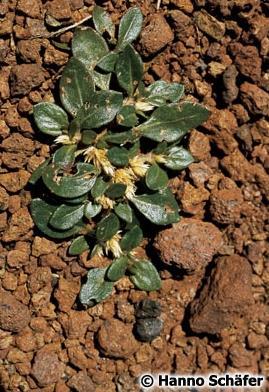
purple joyweed
Alternanthera caracasana