
Port Jackson wattle, blue-leaved wattle (Acacia saligna)
Port Jackson wattle, blue-leaved wattle
Description
Acacia saligna is an evergreen shrub or small tree with distinctive blue‑green, sickle‑shaped phyllodes rather than true leaves, and conspicuous bright yellow, globular flower heads followed by narrow seed pods. Its growth habit can be bushy or tree‑like depending on site conditions, and bark and branchlets are typically smooth. The species is native to southwestern Australia and is easily recognised in the field by its foliage colour and spherical yellow inflorescences.
Distribution
Acacia saligna originates from southwestern Australia but is present in parts of Continental Portugal where it has been planted for ornament, stabilization and shelter. Records for Portugal continental indicate occurrences in urban plantings, coastal and disturbed sites, and occasional garden escapes, although detailed local surveys are needed to map its full extent. Because no specific observation record is supplied for this catalogue entry, its local abundance should be treated cautiously and confirmed by field checks.
Management measures
Management relies on early detection, removal of seedlings and saplings, and careful control of larger individuals combined with restoration of native vegetation to reduce reinvasion. Mechanical removal and cutting with follow‑up treatment of stumps or resprouts are commonly used; use of herbicide may be an option but only as a regulated, professionally supervised measure and following local guidance. Long‑term control also requires monitoring of the seedbank, preventing further planting, and public awareness to limit spread from gardens and roadside plantings.
Ecological impact
Where it establishes, Acacia saligna can form dense stands that outcompete native shrubs and herbaceous vegetation, altering habitat structure and reducing local biodiversity. Its ability to fix nitrogen can change soil nutrient status, which may favour opportunistic species and disturb nutrient‑poor coastal and dune communities. Dense stands can also alter fuel loads and ecosystem processes, so preventing expansion is important for conserving sensitive native habitats.
Related plants
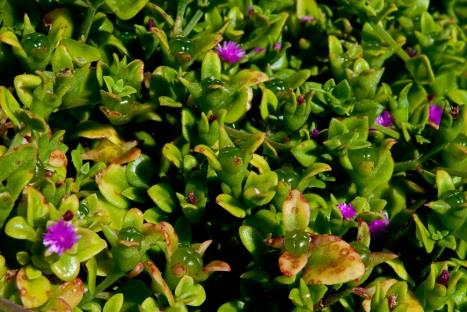
baby sun rose
Aptenia cordifolia
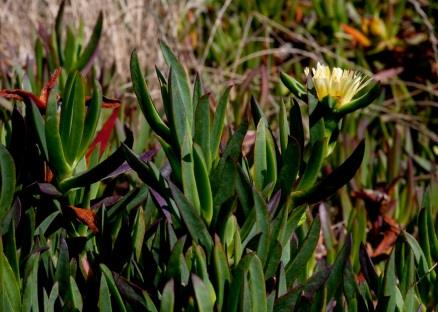
hottentot fig
Carpobrotus edulis
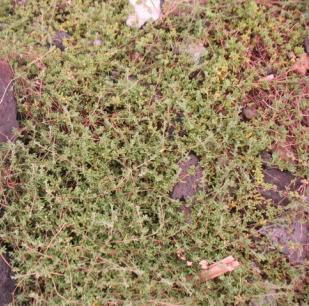
rosea ice plant
Drosanthemum floribundum
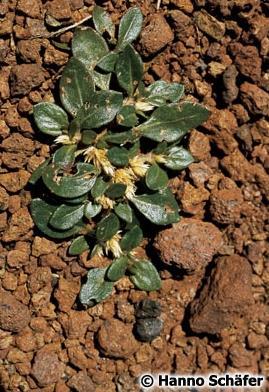
purple joyweed
Alternanthera caracasana