
black wattle, Australian acacia, green wattle, tan wattle (Acacia mearnsii)
black wattle, Australian acacia, green wattle, tan wattle
Description
Acacia mearnsii is a fast‑growing tree with pinnate leaves bearing numerous small pinnules, conspicuous globose clusters of yellow flowers and flattened seed pods; bark is often dark and fissured on older stems. It is native to Australia and widely planted elsewhere for timber, tannin and ornament, and can form dense stands where it becomes established. Young plants and regrowth are readily visible by their distinctive bipinnate foliage and abundant seedling carpets in disturbed ground.
Distribution
In Continental Portugal Acacia mearnsii is known from cultivated plantings and from scattered escapes into semi‑natural areas, but formal observations for this record were not supplied. Its current extent in the mainland should be considered patchy and subject to change as new escapes are reported or removed. Surveillance of roadsides, riparian zones and former plantations is useful to detect further spread early.
Management measures
Management is based on an integrated approach combining cutting or felling, removal of stumps or prevention of resprouting, follow‑up removal of seedlings and persistent monitoring to exhaust the seed bank. Disposal of cut material and cleaning of machinery or vehicles is important to avoid spreading seeds; restoring cleared sites with native vegetation reduces re‑invasion risk. Herbicide use is an option but should be limited to regulated, professionally supervised applications and combined with mechanical control and long‑term monitoring.
Ecological impact
Where it becomes abundant, Acacia mearnsii can outcompete native plants and alter community composition by forming dense, monospecific stands. As a nitrogen‑fixing species it may change soil nutrient balances, favouring nitrophilous species and altering successional trajectories and ecosystem processes such as fire behaviour and water relations. Local biodiversity can decline through habitat change and by modifying seed banks and light availability under closed canopies.
Related plants
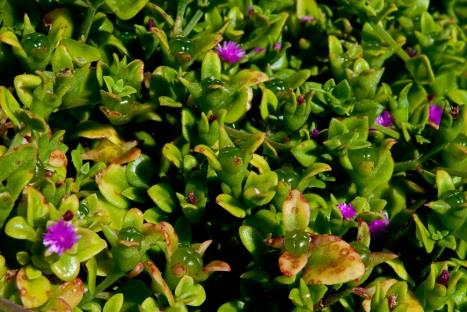
baby sun rose
Aptenia cordifolia
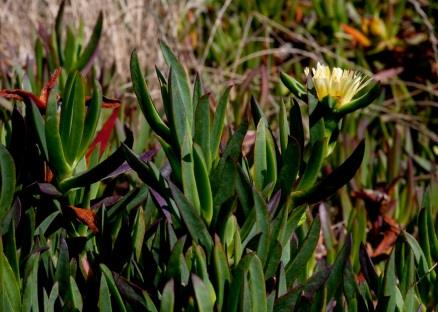
hottentot fig
Carpobrotus edulis
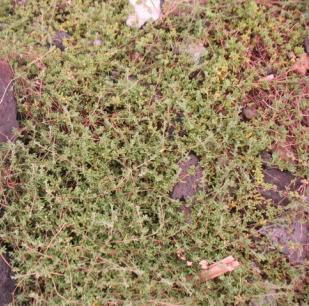
rosea ice plant
Drosanthemum floribundum
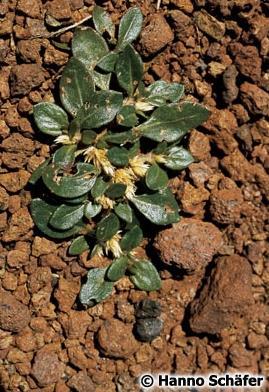
purple joyweed
Alternanthera caracasana