
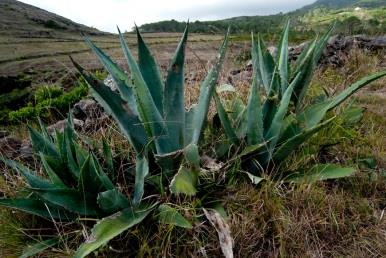
century plant (Agave americana)
century plant
Description
Agave americana is a perennial succulent forming a dense basal rosette of thick, fibrous leaves that are typically bluish-green and armed with marginal teeth and a terminal spine. Mature plants are monocarpic and produce a tall, conspicuous flowering stalk before dying, often leaving offsets at the base. The species is native to Mexico and neighbouring parts of Central America but has been widely cultivated as an ornamental in many temperate and subtropical regions.
Distribution
This species is reported from the Azores with records on multiple islands, but no specific observation or precise locality was supplied for this catalogue entry. Outside the Azores Agave americana is commonly planted in gardens and can escape cultivation to persist in disturbed coastal, roadside and ruderal habitats. The true extent of naturalisation in the Azores should be confirmed by targeted field surveys and verified specimen records.
Management measures
Effective management uses an integrated approach combining manual removal or excavation of whole rosettes and crowns, careful disposal of removed material to prevent re-rooting, and repeat monitoring for new shoots and seedlings. Mechanical removal may need follow-up treatments and care to avoid injury from spines; herbicide is a possible option only under regulated conditions and when applied by trained professionals. Preventative measures include avoiding planting near natural areas, educating landowners, and prompt removal of garden escapes.
Ecological impact
When naturalised, Agave americana can form dense clumps that reduce space for native seedlings and alter vegetation structure in dry and disturbed habitats. The species' sharp leaves pose a physical hazard to people and animals and can change how habitats are used by wildlife. Large stands may modify local microhabitats and reduce native plant diversity if spread is not controlled.
Related plants
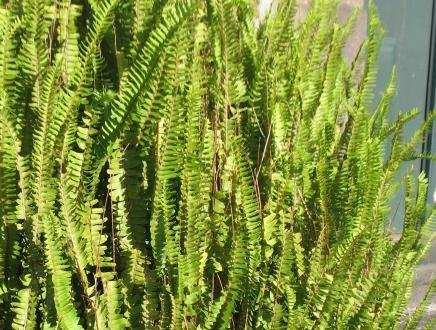
sword fern
Nephrolepis cordifolia
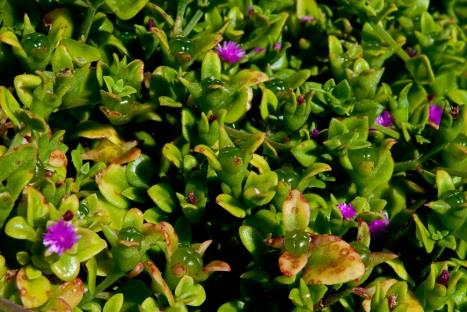
baby sun rose
Aptenia cordifolia
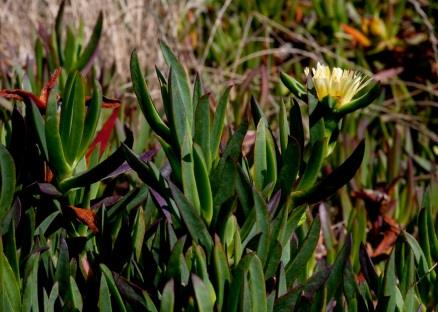
hottentot fig
Carpobrotus edulis
rosea ice plant
Drosanthemum floribundum