
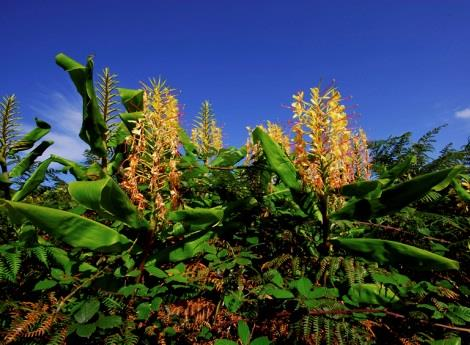
kahili ginger (Hedychium gardnerianum)
kahili ginger
Description
Hedychium gardnerianum is a perennial, rhizomatous flowering plant with erect stems, large lanceolate leaves and showy, fragrant orange-yellow hooded flowers produced on terminal spikes. It commonly forms dense clumps and spreads vegetatively from robust underground rhizomes as well as by seed. These visible traits make the species relatively easy to recognize in gardens and natural areas.
Distribution
Native to the eastern Himalaya and adjacent parts of South Asia, Hedychium gardnerianum has been widely introduced as an ornamental. It is known to naturalize and become invasive on many oceanic islands and in mild-temperate regions; in the Azores its presence is reported for São Miguel, although specific observation details are not supplied here. Given its invasive history elsewhere, caution is warranted when assessing its local distribution and potential for further spread.
Management measures
Management relies on an integrated approach combining repeated mechanical removal of flowering stems and careful excavation of rhizomes to prevent regrowth, together with ongoing monitoring to remove resprouts and seedlings. Preventing seed set and proper disposal of removed material are important to avoid further spread; herbicide may be considered only as a regulated, professionally supervised option. Restoration of cleared sites with native species and public awareness help reduce the risk of reinvasion.
Ecological impact
Hedychium gardnerianum can form dense, monospecific stands that shade out native understory plants and alter successional trajectories. On São Miguel and similar islands the species may reduce native plant diversity, modify habitat structure and interfere with natural regeneration of forest species.
Related plants
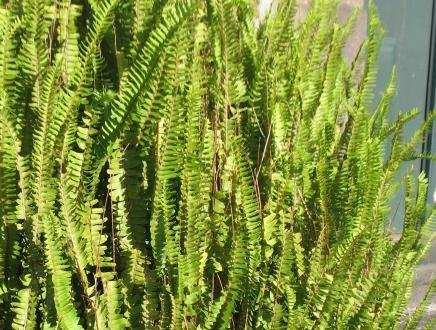
sword fern
Nephrolepis cordifolia
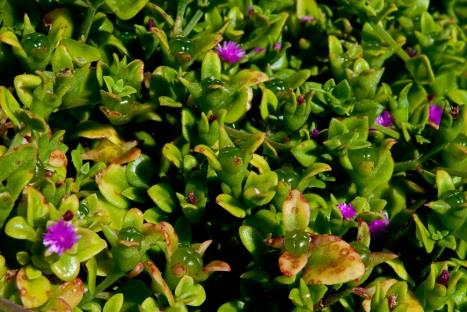
baby sun rose
Aptenia cordifolia
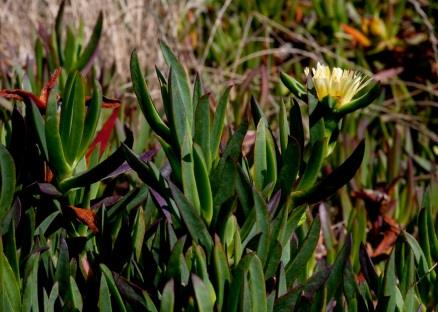
hottentot fig
Carpobrotus edulis
rosea ice plant
Drosanthemum floribundum