
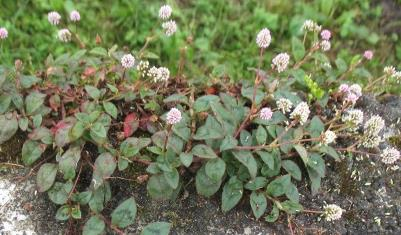
pink knotweed (Persicaria capitata)
pink knotweed
Description
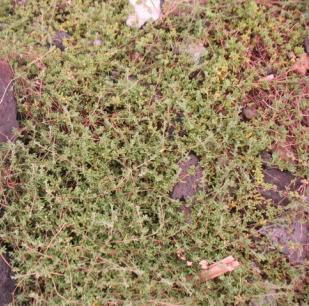
Persicaria capitata is a low, mat-forming herb with glossy, often rounded leaves and distinctive compact pink, button-like flower clusters that sit slightly above the foliage. The plant commonly roots at nodes and forms dense carpets in cultivated and disturbed sites, making it readily recognisable in the field. It is broadly native to parts of temperate and subtropical Asia but is widely used in horticulture elsewhere.
Distribution
Reported from the Azores, Persicaria capitata is associated with horticultural plantings and occasional escapes, but no island-level records or specific observations are supplied here. Its present distribution in the archipelago is therefore uncertain and may be restricted to gardens, roadside verges and other human-modified habitats. Such horticultural escapes can act as local sources for further spread, so records should be interpreted with caution.
Management measures
Management should prioritise early detection, removal of individual plants including roots or mat fragments, and careful disposal of plant material to prevent re-rooting and spread. Preventative actions include avoiding planting in sensitive areas, cleaning soil and debris from tools and equipment, and raising awareness in the horticultural trade; chemical control with herbicide is an option only under regulated, professionally supervised application. Monitoring treated sites and restoring native groundcover will help reduce the risk of re-invasion.
Ecological impact
Where it establishes, Persicaria capitata can form dense mats that suppress native low-growing plants and alter microhabitat conditions such as light and moisture at ground level. In the Azores its ecological impact is still uncertain given limited evidence, but similar introductions elsewhere have affected vulnerable coastal and disturbed habitats. Managing local outbreaks can help limit potential competition with native flora and protect habitat structure.
Related plants
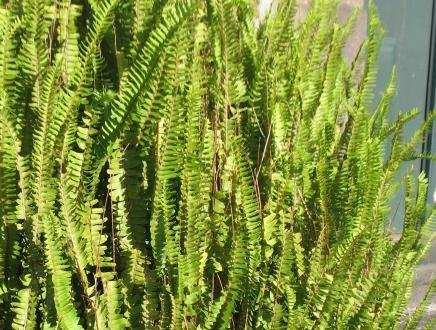
sword fern
Nephrolepis cordifolia
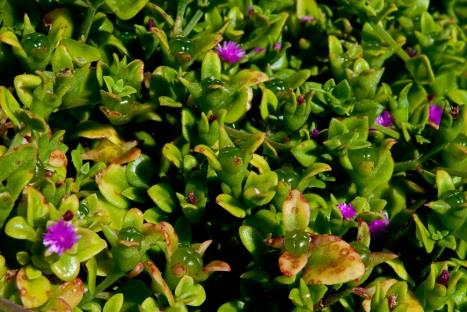
baby sun rose
Aptenia cordifolia
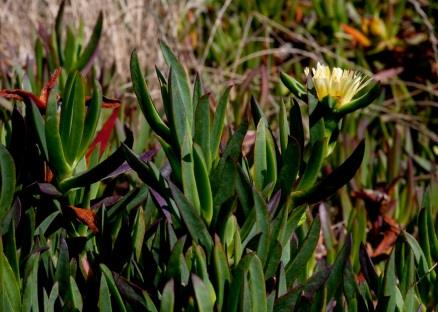
hottentot fig
Carpobrotus edulis
rosea ice plant
Drosanthemum floribundum