
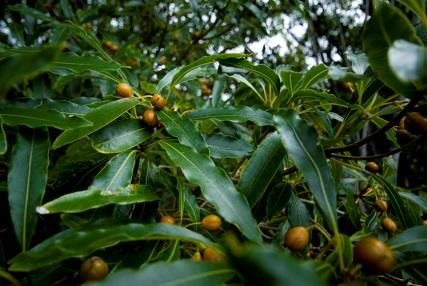
sweet pittosporum (Pittosporum indulatum)
sweet pittosporum
Description
Pittosporum indulatum is an evergreen shrub or small tree with glossy, lance-shaped leaves, clusters of fragrant white to creamy flowers and sticky seed capsules that often contain dark seeds embedded in a resinous pulp. The species is readily noticeable in cultivation and in escaped specimens by its dense crown and the characteristic sticky fruits that can persist on branches. It is broadly native to eastern Australia and is commonly used as an ornamental outside its native range.
Distribution
This record lists Pittosporum indulatum for the Azores, but no specific island or observation details are supplied, so any occurrence should be regarded as tentative until verified. The species is known elsewhere to naturalize from plantings and may be present in gardens, hedgerows or as escapes in disturbed sites in the region. Local surveys and verification are needed to establish its current distribution and whether wild populations are established in the Azores.
Management measures
Management should follow an integrated approach of prevention, early detection and rapid response: remove young plants and seedlings by hand, cut or girdle larger stems and remove root material where feasible, and collect and dispose of fruiting material to prevent further seed spread. Follow-up monitoring and restoration with appropriate native species reduce the chance of reinvasion, and disposal must prevent seed dispersal by birds or humans. Herbicide use is a regulated option that should be applied only by trained professionals and combined with mechanical measures and follow-up monitoring.
Ecological impact
Where it naturalizes, Pittosporum indulatum can form dense stands or thickets that shade and outcompete native understory plants, altering species composition and reducing habitat quality for indigenous flora and fauna. Sticky fruits are bird-dispersed, which can facilitate spread into natural habitats and make containment more difficult. Over time, its establishment may change vegetation structure and ecological processes such as regeneration dynamics and light availability in invaded sites.
Related plants
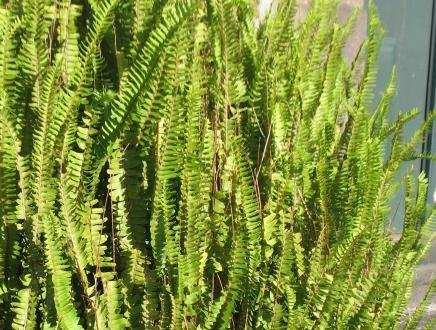
sword fern
Nephrolepis cordifolia
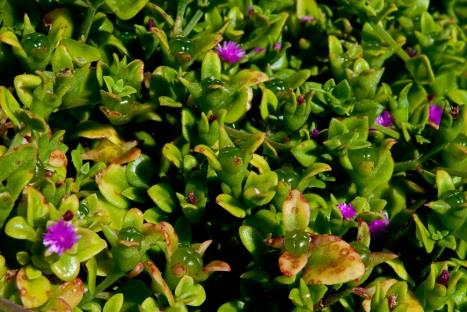
baby sun rose
Aptenia cordifolia
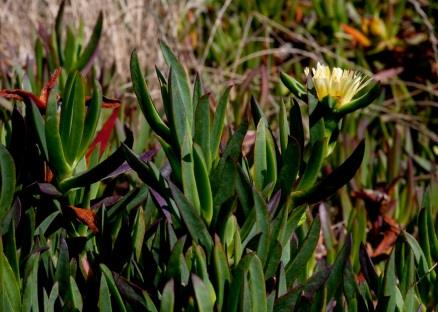
hottentot fig
Carpobrotus edulis
rosea ice plant
Drosanthemum floribundum