
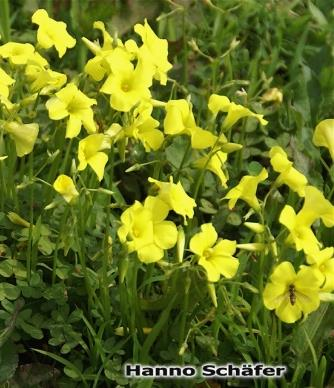
soursob (Oxalis pes-caprae)
soursob
Description
Oxalis pes-caprae is a bulbous perennial with trifoliate, clover-like leaves and conspicuous yellow, funnel-shaped flowers that open on sunny days. It grows from underground bulbs and often forms dense mats or carpets in disturbed or open habitats. The species is recognizable by its bright flowers and the habit of producing clusters of small bulbs that allow it to spread vegetatively.
Distribution
The species is native to southern Africa but has become widely introduced in Mediterranean and subtropical regions worldwide. It is recorded from the Azores in the supplied catalogue information, although the specific island is not specified and no original observation details were supplied. In introduced ranges it commonly occurs in gardens, roadside verges, coastal slopes and other disturbed areas where climate is favourable.
Management measures
Management relies on an integrated approach combining manual removal, repeated monitoring and restoration of competitive native vegetation to prevent re-establishment. Careful removal of bulbs and bulb fragments, cleaning of tools and removal of soil from footwear or equipment help limit unintentional spread; removed plant material should not be added to garden compost. Chemical control is a possible option but must be applied only as part of a regulated plan and under professional supervision; prevention and early detection are especially important.
Ecological impact
Where it becomes abundant, Oxalis pes-caprae can form dense groundcover that shades and outcompetes small native herbs and seedlings, potentially reducing local plant diversity. Its dominance can alter microhabitat conditions such as light availability and seedling recruitment, and may affect pollinator visitation patterns by providing abundant but seasonally concentrated floral resources. In grazed or restored habitats its persistent bulb bank can complicate restoration efforts and delay recovery of native communities.
Related plants
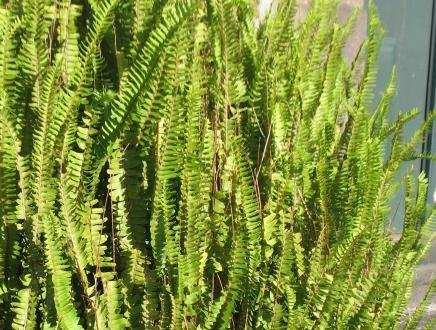
sword fern
Nephrolepis cordifolia
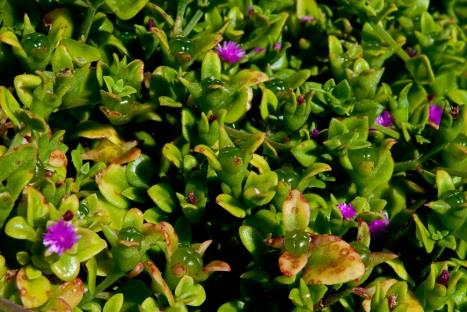
baby sun rose
Aptenia cordifolia
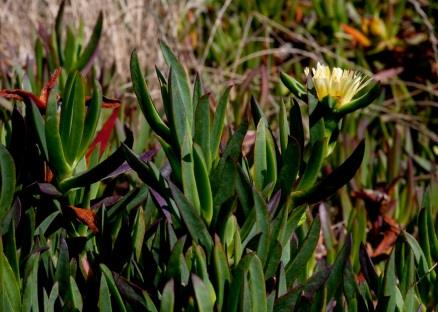
hottentot fig
Carpobrotus edulis
rosea ice plant
Drosanthemum floribundum