
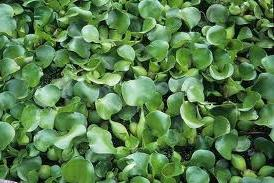
water hyacinth (Eichhornia crassipes)
water hyacinth
Description
Eichhornia crassipes is a free‑floating perennial aquatic plant with glossy, rounded leaves borne on swollen, bulbous petioles and conspicuous lavender to purple flower spikes. It reproduces rapidly by vegetative fragmentation and stolon formation and commonly forms dense mats on the water surface. The species is native to South America but has been widely introduced to freshwater systems worldwide.
Distribution
This catalogue lists Eichhornia crassipes for the Azores, specifically São Miguel, but no specific observation details were supplied with this record. Elsewhere the species is a widespread invasive of warm‑temperate and tropical lakes, ponds and slow‑moving waterways; in the Azores it should be treated as a species capable of establishing in still or slow freshwater bodies. Targeted surveys on São Miguel are advisable to confirm its current presence and extent.
Management measures
Management should use an integrated approach combining early detection, prevention of spread (boat and equipment hygiene), physical or mechanical removal where feasible, and restoration of flow and native vegetation. Biological control agents and mechanical/manual harvesting have been applied elsewhere and can be considered as part of a coordinated plan; herbicides are a regulated option and should only be used under professional supervision and within legal frameworks. Proper disposal of removed material and ongoing monitoring are essential to prevent re‑establishment.
Ecological impact
Dense mats of Eichhornia crassipes reduce light penetration and dissolved oxygen, suppress native submerged and emergent vegetation, and alter habitat for fish and invertebrates. They can impede navigation, irrigation and recreational uses of water bodies and may increase habitat for mosquito breeding. In small island freshwater systems such as those on São Miguel these impacts can strongly disrupt native aquatic communities and water management.
Related plants
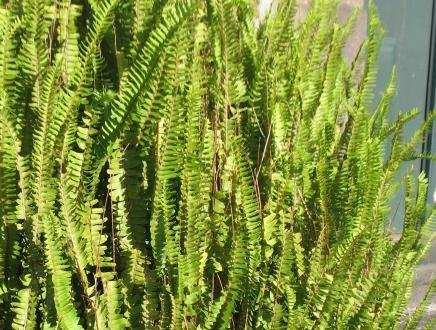
sword fern
Nephrolepis cordifolia
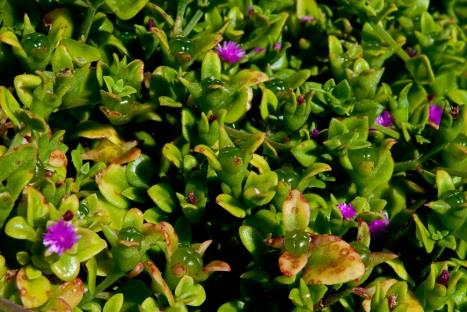
baby sun rose
Aptenia cordifolia
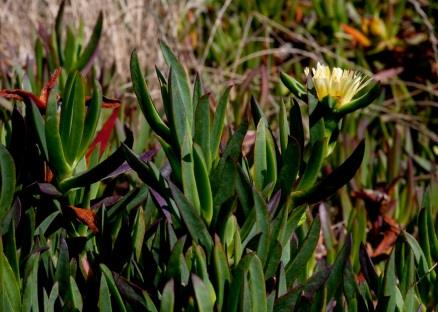
hottentot fig
Carpobrotus edulis
rosea ice plant
Drosanthemum floribundum