
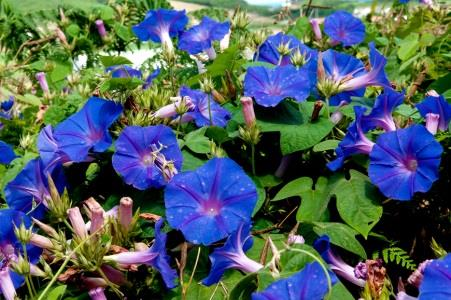
blue morning glory (Ipomoea indica)
blue morning glory
Description
Ipomoea indica is a vigorous, twining perennial vine with glossy, heart-shaped leaves and conspicuous blue, funnel-shaped flowers. It often spreads by stolons and vigorous climbing stems that form dense mats or climb over shrubs and trees, shading underlying vegetation. Its overall habit and showy flowers make it a frequent ornamental escape from warmer regions of the Americas where it has its broad origin.
Distribution
Ipomoea indica has a broad native origin in tropical and subtropical regions of the Americas and is widely established as an ornamental escape in warm regions worldwide. Presence in the Azores has been recorded in the literature and horticultural reports, but island-level details and original observations are not supplied here, so the precise distribution within the archipelago is unclear. Where introduced elsewhere it commonly appears along disturbed habitats, gardens and coastal areas, and similar habitats should be monitored in the Azores.
Management measures
Management relies on an integrated approach combining early detection, repeated mechanical removal of stems and careful extraction of roots and stolons, and disposal of removed material to prevent re-rooting. Preventive actions such as cleaning equipment, avoiding spread via horticultural trade, restoring cleared sites with native plants, and regular monitoring are important; herbicide may be used only as a regulated, professionally supervised option applied by qualified personnel. Coordination with local conservation authorities and prompt reporting of new occurrences increase the chance of successful control.
Ecological impact
Where it becomes dense, Ipomoea indica can smother ground-layer vegetation, outcompete native seedlings and alter light availability, which may reduce local plant diversity. Its climbing habit allows it to overtop shrubs and small trees, potentially changing community structure and interfering with natural regeneration. In island contexts such as the Azores, these effects can be especially concerning because native communities are often limited in extent and islands are sensitive to invasions.
Related plants
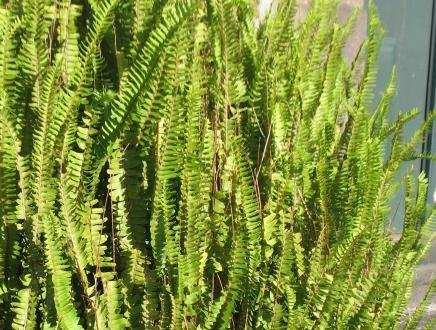
sword fern
Nephrolepis cordifolia
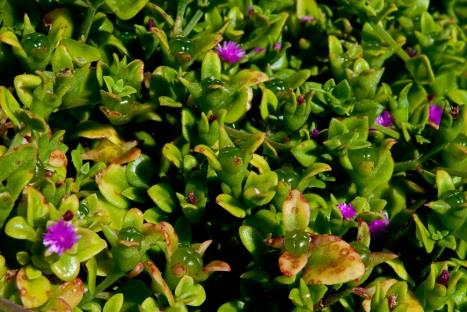
baby sun rose
Aptenia cordifolia
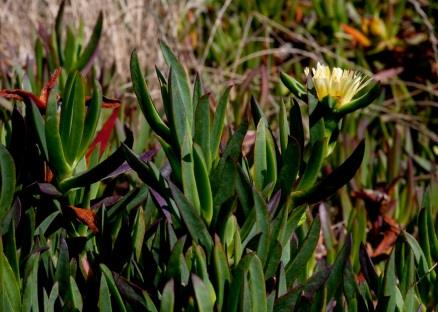
hottentot fig
Carpobrotus edulis
rosea ice plant
Drosanthemum floribundum