
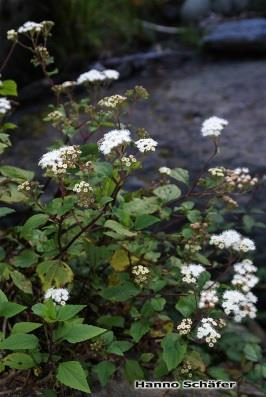
crofton weed (Ageratina adenophora)
crofton weed
Description
Ageratina adenophora is a herbaceous to subshrubby plant with branching stems, opposite serrated leaves and clusters of small white to cream flower heads. It typically forms dense patches through abundant seed production and vegetative spread, and the foliage often has a slightly hairy texture. The species is native to Central America and Mexico but is widely introduced in subtropical regions outside its native range.
Distribution
The species is reported from the Azores but the specific island is not specified and no detailed observation was supplied, so its local distribution there should be treated as uncertain. Elsewhere Ageratina adenophora is known as an introduced invasive in many subtropical and mild-temperate areas, so records in Atlantic island groups warrant careful verification. Management and surveying are recommended to clarify its extent in the Azores rather than assuming widespread establishment.
Management measures
Management should follow an integrated approach combining early detection, careful manual removal of whole plants including roots where feasible, and regular monitoring to prevent seed set and re-establishment. Removed material should be contained and disposed of to avoid further spread, and restoration with native species can reduce recolonisation risk. Chemical control with herbicides can be considered but only as a regulated, professionally supervised option within local legal and environmental guidelines.
Ecological impact
Ageratina adenophora can form dense stands that suppress growth and recruitment of native herbaceous and woody plants, potentially reducing local plant diversity. Its accumulation of biomass may alter litter composition and microhabitat conditions, with consequences for soil processes and seedling survival of native species. On islands such as the Azores, even small populations could disrupt native plant communities and warrant early management to avoid larger ecological effects.
Related plants
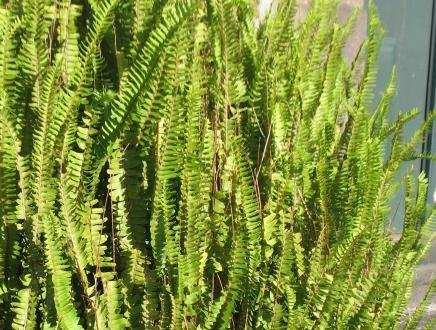
sword fern
Nephrolepis cordifolia
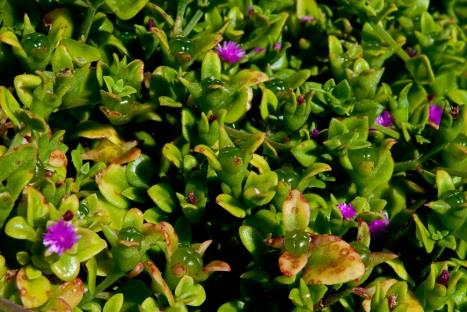
baby sun rose
Aptenia cordifolia
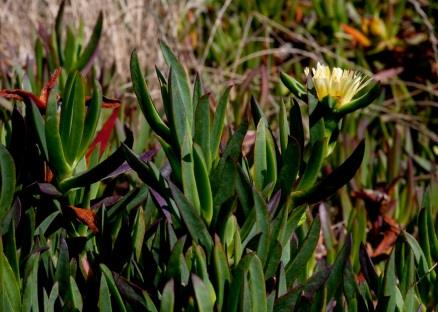
hottentot fig
Carpobrotus edulis
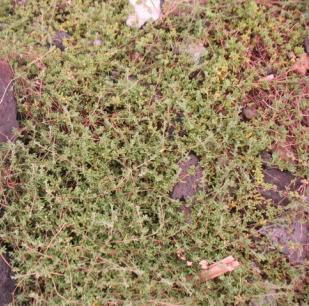
rosea ice plant
Drosanthemum floribundum