
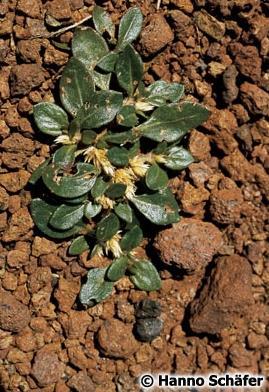
purple joyweed (Alternanthera caracasana)
purple joyweed
Description
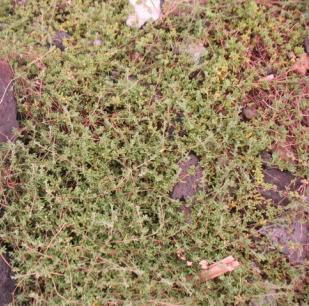
Alternanthera caracasana is a prostrate, mat-forming herb with opposite, often slightly succulent leaves that commonly show a purple or reddish tint and produce small clustered flowers. Stems tend to root at the nodes, allowing the plant to spread across bare ground and among low vegetation. The species is broadly native to tropical parts of the Americas and is known elsewhere as an escape from cultivation.
Distribution
This catalogue lists Alternanthera caracasana for the Azores, but no specific island or observation details are provided, so its local occurrence should be treated as possible but not fully documented. Elsewhere this species appears sporadically in disturbed sites, gardens and coastal margins, so similar habitats in the Azores are plausible places to check. Active surveys and verified records are recommended to clarify its true distribution in the archipelago.
Management measures
Control is best approached with an integrated strategy combining manual removal of whole plants (including roots and runners), regular monitoring and prevention of re-establishment by removing seed sources and limiting soil disturbance. Dispose of removed material carefully to avoid vegetative spread, and clean tools and footwear after work; repeated follow-up is usually required because of resprouting from buried stems. Chemical control with herbicides can be considered only as a regulated, professionally supervised option and should be used alongside non-chemical measures where permitted.
Ecological impact
When established, Alternanthera caracasana can form dense mats that suppress germination and growth of native ground-layer plants and change habitat structure. In disturbed coastal and ruderal habitats it may compete with native pioneers and garden plants, potentially reducing local plant diversity and altering microhabitats. Early detection and rapid response reduce the risk of wider ecological impacts in the Azores.
Related plants
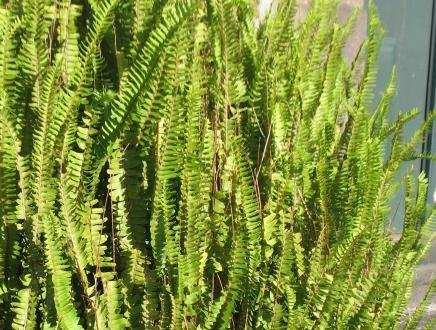
sword fern
Nephrolepis cordifolia
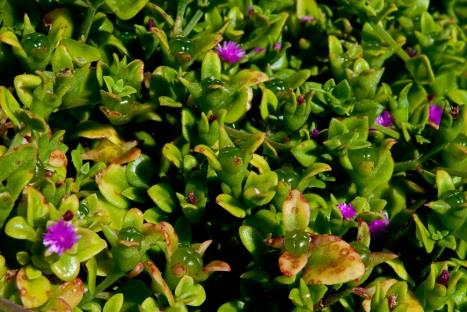
baby sun rose
Aptenia cordifolia
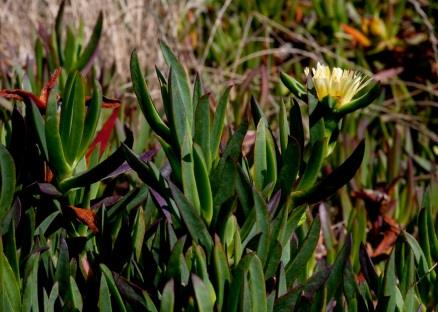
hottentot fig
Carpobrotus edulis
rosea ice plant
Drosanthemum floribundum