
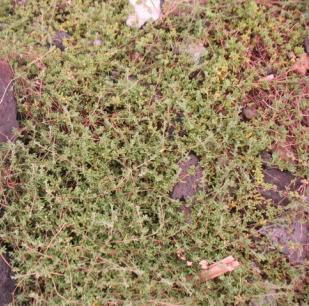
rosea ice plant (Drosanthemum floribundum)
rosea ice plant
Description
Drosanthemum floribundum is a low, succulent, mat-forming perennial with fleshy leaves and conspicuous rose-pink daisy-like flowers that are often grown as an ornamental groundcover. Its growth habit creates dense mats of trailing stems and the plants are readily noticeable when in flower. The species is native to southern Africa and is commonly moved around the world in horticultural trade.
Distribution
Records indicating Drosanthemum floribundum in the Azores are limited and the exact island-level distribution is not specified in this source, so confirmed wild occurrences should be verified by local surveys. The species commonly appears as a garden escape in many regions and its presence in the Azores may be linked to cultivation or accidental introduction. Caution is advised when interpreting unverified reports and further field checks are recommended.
Management measures
Management should follow an integrated approach combining early detection, physical removal of whole plants including roots, and removal of flower heads or seed to prevent further spread. Small infestations can be hand-pulled or dug out, taking care to collect and destroy vegetative fragments; larger infestations require coordinated containment, repeated follow-up and restoration with native vegetation. Chemical control may be considered only as a regulated option and must be applied by trained professionals under local rules; biosecurity, disposal of material and public awareness are important to prevent reintroduction.
Ecological impact
Where it becomes established, Drosanthemum floribundum can form dense mats that shade and suppress native ground-layer plants, potentially altering community composition and reducing recruitment of native seedlings. Its succulence and mat-forming habit can also change surface moisture and substrate conditions in disturbed coastal or rocky sites. The magnitude of impacts in the Azores is uncertain given limited records, but vigilance is warranted because similar introductions elsewhere have affected local plant communities.
Related plants
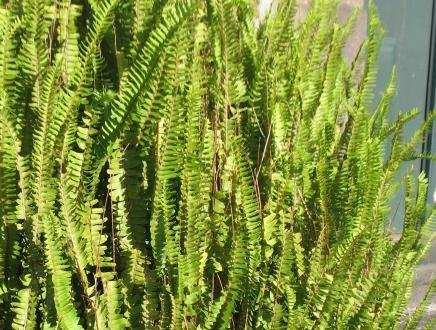
sword fern
Nephrolepis cordifolia
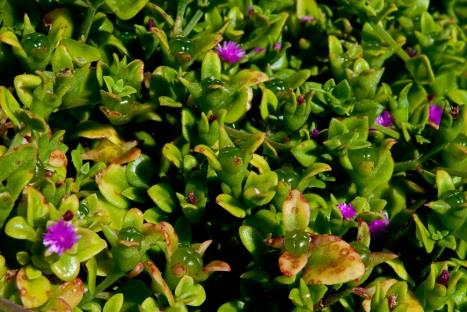
baby sun rose
Aptenia cordifolia
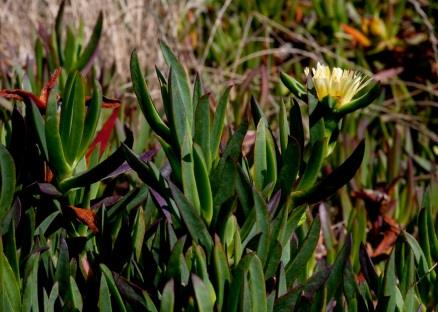
hottentot fig
Carpobrotus edulis
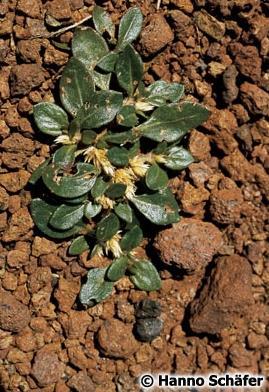
purple joyweed
Alternanthera caracasana