
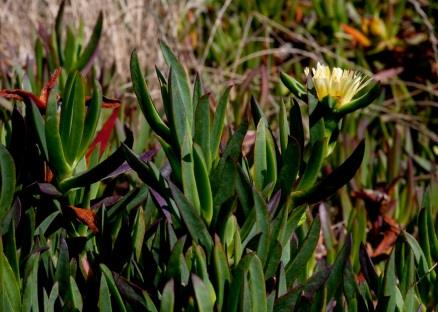
hottentot fig (Carpobrotus edulis)
hottentot fig
Description
Carpobrotus edulis, commonly called hottentot fig, is a mat-forming succulent with fleshy, triangular leaves, large daisy‑like flowers and fleshy fruit. It grows prostrate and can form dense carpets that are easily seen on coastal slopes and disturbed ground. The species is native to southern Africa and is widely introduced elsewhere as an ornamental and for dune stabilisation.
Distribution
This species is reported from the Azores and there are records indicating occurrence on multiple islands, although the specific source observation for this catalogue entry was not supplied. In the region it is most often associated with coastal habitats such as dunes, cliffs and disturbed shorelines where it establishes vegetatively and by dispersal of fruits and fragments. Given the incomplete observation data, its local extent should be treated cautiously and confirmed by targeted surveys.
Management measures
Management is best approached as an integrated program combining manual removal of whole plants and roots, careful collection and disposal of fragments, and follow-up monitoring to detect regrowth. Mechanical removal should avoid creating many small fragments that can re-root; replanting with appropriate native coastal species and stabilising the site helps prevent re‑invasion. Herbicide may be used only as a regulated, professionally supervised option and prevention, early detection and public awareness are important components of control.
Ecological impact
When dense, Carpobrotus edulis can outcompete native coastal vegetation and reduce local plant diversity by forming persistent mats that limit seedling establishment. Its spread can alter dune morphology and surface processes and may change the availability of floral resources for native pollinators. These changes can complicate the conservation of sensitive coastal habitats and endemic species in island environments.
Related plants
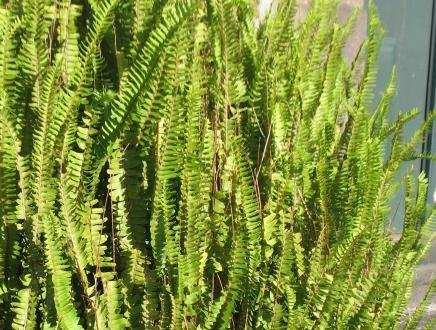
sword fern
Nephrolepis cordifolia
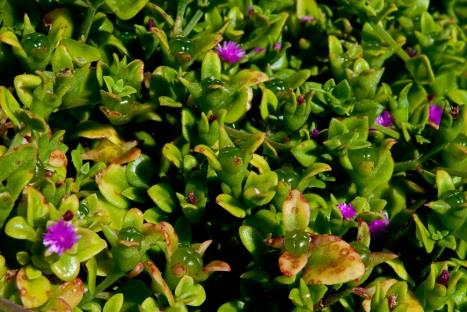
baby sun rose
Aptenia cordifolia
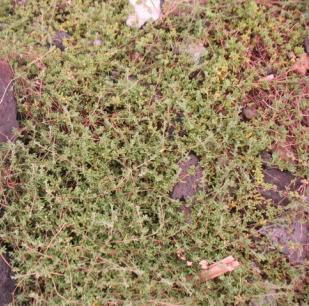
rosea ice plant
Drosanthemum floribundum
purple joyweed
Alternanthera caracasana