
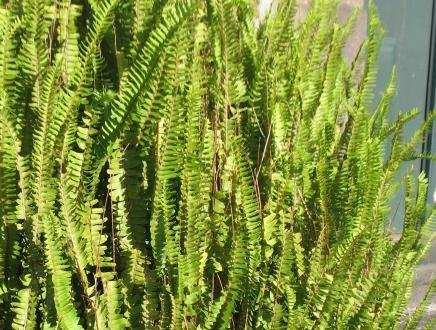
sword fern (Nephrolepis cordifolia)
sword fern
Description
Nephrolepis cordifolia is a robust, evergreen fern with arching, pinnate fronds and a creeping rhizome that can form small tubers, allowing vegetative spread. The fronds are typically glossy and can create dense tussocks or carpets where the plant becomes established. These visible traits make it recognizable in cultivation and in the field when escapes occur.
Distribution
Nephrolepis cordifolia is broadly native to warm-temperate to tropical regions worldwide and is widely used as an ornamental. In the Azores this species is listed for São Miguel in catalogue records, which suggests introduction likely via horticulture; formal field observations are not supplied here so local extent should be confirmed with surveys. It can escape gardens and establish in disturbed habitats, riparian margins or shaded slopes where conditions are suitable.
Management measures
Management relies on integrated measures including careful manual removal of fronds and excavation of creeping rhizomes and tubers, with repeated follow-up to catch resprouts. Sanitation — cleaning soil from tools and disposing of plant material securely — and restoration of native vegetation to reduce re-invasion are important complementary actions. Chemical control may be considered only as a regulated, professionally supervised option and should be used alongside physical control and monitoring.
Ecological impact
Where Nephrolepis cordifolia becomes established it can form dense ground cover that shades and outcompetes native understory plants and tree seedlings. It may alter litter accumulation and microhabitat conditions, potentially reducing regeneration of native species in shaded or disturbed sites. The species therefore poses a risk to local plant community composition and to restoration efforts if escapes are not controlled.
Related plants
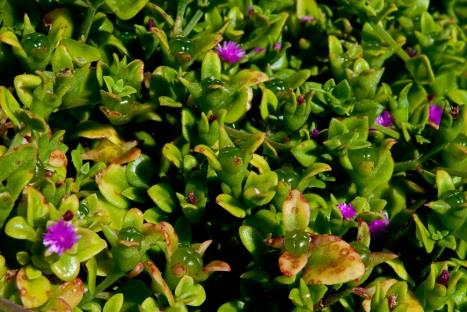
baby sun rose
Aptenia cordifolia
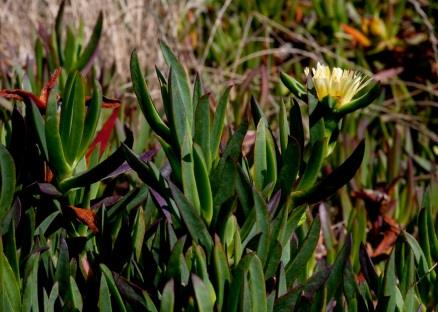
hottentot fig
Carpobrotus edulis
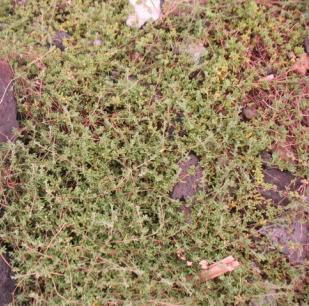
rosea ice plant
Drosanthemum floribundum
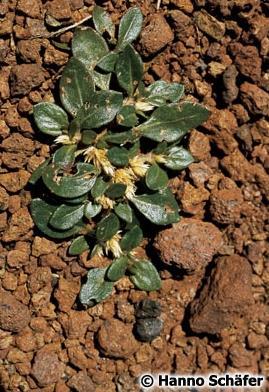
purple joyweed
Alternanthera caracasana